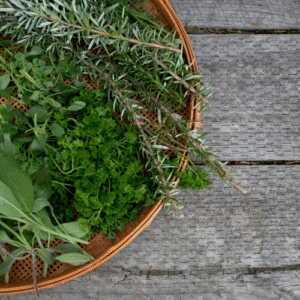
As winter approaches, we start to think of soups and stews—food filled with comfort, warmth, and flavour. These nine herbs are winter staples. When planning your autumn garden, consider where you will plant them.
-
Thyme and Rosemary
These two herbs form the base of most roasts, soups, and sauces.
They are a must in the winter herb garden. Both herbs are hardy and frost-tolerant and will cope with dry conditions.
Wet feet are the biggest threat to these herbs. In winter rainfall areas, ensure the soil is well-drained, and the plants receive plenty of sunshine. If plants are in containers, move them under the roof overhang or move the containers indoors if you have space.
-
Oregano and Marjoram
These herbs have a strong aromatic taste, ideal for rich winter food. Oregano is stronger than Marjoram and can withstand longer cooking times.
Both these herbs are used in Mediterranean cooking. Oregano is a hardy frost, frost-tolerant herb that prefers lots of sunshine.
Marjoram will handle some frost. In icy areas, pot up the plant and take it indoors. Marjoram grows well in pots. If you grow it under a cover, you will succeed with Marjoram in the garden. Both plants should be in well-drained soil to prevent water-logged soil, especially in winter rainfall areas.
-
Parsley
Parsley enhances the flavour of soups, stews, and tomato sauces. This herb is so much more than just a garnish. The stalk has just as much flavour as the leaf, and both are used to flavour stews and stocks.
Overwintering adult parsley plants is not a problem, as parsley is a very hardy herb. No winter protection is required, but the plant does not form fresh leaves in the cold season.
Parsley should be in well-drained soil to prevent water-logged soil, especially in winter rainfall areas.
-
Sage
Sage is commonly used to season poultry or sausage, infuse butter, or add flavour to root vegetables like sweet potatoes or parsnips.
Sage will handle some frost. In very cold areas, pot up the plant and take it indoors. If you grow it under a cover, you will succeed with sage in the garden. Sage doesn’t like humid weather and wet feet. Sage is a hardy herb, flourishing in well-drained soil with open-air circulation.
-
Coriander
Fresh, citrusy coriander leaves are used widely in Asian, Oriental and Middle Eastern cooking, topping rice dishes, curries, soups and stews. Fresh coriander stirred into a stew adds a refreshing zest to the foundations of a curry.
Coriander is frost sensitive. Areas with a milder winter coriander will thrive in well-drained soil. In very cold areas, coriander can be planted in pots inside and placed in a sunny, warm spot.
-
Bay leaves
Fresh or dried bay leaves are used in cooking for their distinctive flavour and fragrance. The leaves are often used to flavour soups, stews and curry. Cooking rice and pasta with bay leaves adds a distinct flavour to both.
Bay leaves are frost-hardy, but the frost might damage the tree in bitterly cold areas. If the tree is in a pot, bring it indoors. Outside trees can be protected with a cover. Bay leaves do not like wet feet. In winter rainfall areas, ensure you have well-drained soil around the tree.
-
Curry Tree
Curry trees are essential food flavouring in Indian and Asian cuisine, similar to bay leaves. They are especially used in curries with fish or coconut milk. Curry tree leaves fried with ginger add fantastic flavour to curry.
The Curry Tree is frost tender. In areas where it gets very cold, it is best to grow this herb in a pot and move it indoors at night when it gets bitterly cold. Drainage is non-negotiable for Curry Trees, as they detest wet feet.
General TIPS and ADVICE
- If you stay in a summer rainfall area, reduce the watering of herbs grown in containers.
- In winter rainfall areas, ensure the soil around the plants is well-draining and that herbs in pots have good drainage.
- Move pots closer to the house to get extra warmth from the walls. This can change the temperature by up to 5°C.
- Pot up sensitive plants and take them into a shed, garage, or house. If it is an area that is a bit dark, take them outside on sunny days and take them back inside in the evenings.
- Use burlap/hessian or row cover material to protect herb bushes and trees outside against frost.
- Mulch is as essential in a winter garden as in a summer garden. It keeps the soil warmer and, in dry winter areas, helps retain moisture.
Happy gardening friends
Tash