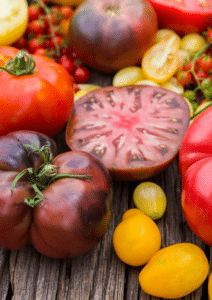
Determinate vs Indeterminate Tomatoes – What’s the Difference?
You are standing at the nursery looking at all those beautiful little tomato seedlings. Roma. Cherry. Beefsteak. Cocktail. Yellow. Red. You pick a few, take them home, plant them… and then three months later one tomato plant is behaving beautifully in its little cage while another has taken over half the veggie garden and is making its way towards the neighbour.
Sound familiar? Here’s the thing: not all tomatoes grow the same way. One of the most useful things you can know before planting tomatoes is whether the variety is determinate or indeterminate. And don’t worry – those big words are actually describing something very simple.
So, what is a determinate tomato?
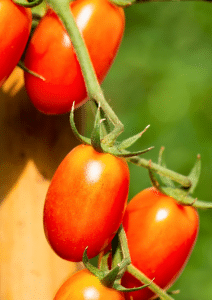
Roma Tomato – Determinate
Think of a determinate tomato as the neat and tidy one. It grows to a certain size, usually stays fairly compact, produces most of its fruit within a shorter period, and then starts slowing down. Basically, it knows when to stop! Determinate tomatoes are often called bush tomatoes because they tend to grow into a bushier, more compact plant rather than continuing upwards and upwards.
This makes them fantastic if you:
- Have a small veggie garden
- Grow in containers
- Have limited space
- Don’t want to build a massive support structure
- Want lots of tomatoes ready around the same time for sauces, preserving or freezing
They still need some support – don’t think “bush tomato” means you can just leave it lying on the ground. Once that plant is full of tomatoes, those branches can become HEAVY. A sturdy tomato cage, short stakes or a simple support frame normally works beautifully.
Then we have the indeterminate tomato…
This is your wild child. An indeterminate tomato doesn’t really get the memo that it should stop growing. As long as the weather is warm and the plant is healthy, it will keep growing, flowering and producing tomatoes throughout the season. And some of them can get BIG. We’re talking 1.5 m, 1.8 m, 2 m and sometimes even taller if you give them the space and a long growing season. This is why you’ll often see gardeners growing these tomatoes up tall stakes, strings, trellises or frames.
Instead of giving you one big flush of tomatoes, indeterminate varieties generally give you a continuous harvest over a longer period. A few tomatoes ripen. Then another few. Then another bunch. And before you know it, you’re walking outside every afternoon with a bowl to collect supper. That is one of the reasons I love them.
So which one should you grow?
Well… why choose? I like having both. Determinate varieties are wonderful when you want a more compact plant or a big harvest over a shorter period. Indeterminate varieties are brilliant when you want tomatoes coming from the garden for months. The important part is knowing what you’re planting BEFORE you plant it. Because that changes where you put it.
This is where garden planning comes in
Please don’t plant the little 20 cm tomato seedling and think “Ag, look how tiny it is. I’ll just pop it here.” Plan for the plant it is going to become. If it’s an indeterminate tomato, give it a position where it can grow UP. Put your trellis, stakes, strings or support structure in place when you plant – not two months later when you’re trying to wrestle a 1.5 m tomato monster into a cage.
Also think about shade. A tall indeterminate tomato planted on the wrong side of your bed can eventually shade smaller crops behind it. Determinate varieties can work beautifully towards the front of beds or in areas where you don’t want a huge plant taking over.
What about containers?
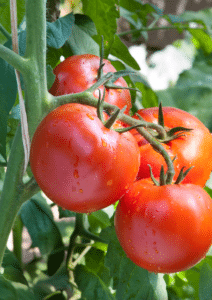
Moneymaker tomato – Indeterminate
Yes, you absolutely can grow tomatoes in pots. But choose wisely. If you have a smaller container, I would lean towards a compact determinate variety. And don’t squeeze a tomato into a tiny pot. Tomatoes are hungry, thirsty plants with a good root system. Give them a decent-sized container with drainage holes and good-quality soil. Indeterminate tomatoes can also grow in containers, but they need much more room, regular feeding, consistent watering and a very strong support system.
That tiny stake from the nursery? It’s not going to make it through summer.
How should you plant your tomato seedlings?
Whether you’re planting determinate or indeterminate tomatoes, start with GOOD soil. Tomatoes are going to spend months growing, flowering and producing food for you, so give them a strong foundation. Add good compost and organic matter to your planting area before you start.
And here’s something special about tomatoes, you can plant them deeper than they were growing in their seedling pot. Remove the lowest leaves and bury part of the stem. Tomatoes can develop additional roots along that buried stem, helping create a stronger root system. Give the plant a good deep watering after planting and add mulch around it to help keep moisture in the soil.
Just don’t pile mulch right against the stem.
And what about pruning?
This is another area where knowing your tomato type matters. With indeterminate tomatoes, I often remove some of the suckers – those little shoots that appear between the main stem and a leaf branch – especially when I’m training the plant vertically. It helps me control the jungle and improves airflow through the plant. But don’t go mad and strip the poor thing bare!
With determinate tomatoes, be much more careful about pruning. Because the plant has a predetermined growth and fruiting pattern, heavy pruning can mean you’re literally cutting away part of your future harvest.
Here’s the easiest way to remember it
- Determinate = grows to a determined size. Bushier. More compact. Most of the harvest comes over a shorter period.
- Indeterminate = keeps going. Taller. Needs stronger support. Produces over a longer period.
That’s really it.
Before you buy your tomatoes this season…
Turn that seed packet around. Read the label on the seedling. Google the variety if you have to. Find out whether it’s determinate or indeterminate before you decide where you’re going to plant it. It is such a small bit of information, but it can completely change how you plan your tomato bed. Because that innocent little seedling you’re holding today? By January it may be taller than you. And taking over the cucumber trellis. And possibly your life. 😂
But that’s summer veggie gardening for you. And I wouldn’t have it any other way.
Want to take the guessing out of growing veggies?
This is exactly why we created the VanZylStead Guide to Growing Veggies. [1]There are so many little things nobody tells you when you start growing food – where to plant, how much to plant, how to prepare your soil, when to sow, how to transplant, feed, water and actually keep those plants alive.
Our guide brings all of that practical information together in one place. Less guessing. Less wasting money. More growing. Because buying the seedling is the easy part. Knowing what to do when you get home? That’s where we want to help.
Enjoy the warmer day Friends
Tash en die Familie
 [1]
[1]