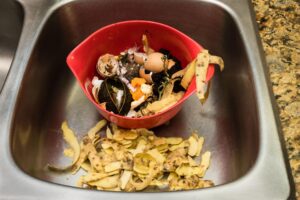
Turn every scrap into garden gold—fast, clean, and perfect for winter
If you’ve ever stood in your kitchen wondering where all that food waste goes… Bokashi might just change the way you see everything. At VanZylStead, Bokashi is a core part of our closed-loop system. Nothing goes to waste. What comes from the garden, goes back into the garden. And Bokashi is one of the easiest, cleanest ways to make that happen—especially in winter when traditional composting slows down.
What is Bokashi?
Bokashi is a method of fermenting food waste, not composting it in the traditional sense. Instead of relying on oxygen and decomposition (like a compost heap), Bokashi uses beneficial microbes to break down food in an anaerobic (no oxygen) environment.
These microbes—often called Effective Microorganisms (EM)—include:
- Lactic acid bacteria
- Yeasts
- Phototrophic bacteria
They work together to ferment your food waste, preserving nutrients instead of losing them through heat and decay. Think of it like pickling your food scraps instead of rotting them.
How Bokashi Actually Works
When you add food waste to your Bokashi bin and sprinkle the Bokashi bran (which is inoculated with microbes), a fermentation process begins.
Here’s what happens:
- The microbes quickly colonise the food, outcompeting harmful bacteria
- Instead of rotting, the waste ferments and acidifies
- This prevents bad smells and stops pests from being attracted
- Nutrients are locked in, not lost
Within about 10–14 days, your food waste is “pre-digested” and ready for the next stage. Important: Bokashi doesn’t fully break food down into compost in the bin—it prepares it for rapid breakdown in the soil.
What You Need to Get Started
You don’t need much to begin:
- A Bokashi bucket (airtight, usually with a tap at the bottom)
- Bokashi bran (the magic ingredient with microbes)
- Your kitchen scraps
The bucket design is important. It keeps air out (for fermentation) and allows you to drain off liquid that forms during the process.
What Can You Put in Bokashi?
This is where Bokashi really shines compared to traditional composting.
You can add:
- Fruit and vegetable scraps
- Cooked food
- Meat and fish
- Dairy
- Bread and grains
- Coffee grounds and tea bags
- Crushed eggshells
Yes—even things you would never normally compost.
What to avoid:
- Large bones
- Excess liquid (soups, oils in large amounts)
How to Use Bokashi (Step-by-Step)
Using Bokashi becomes second nature very quickly.
- Start by adding a layer of food waste to your bucket.
- Chop larger pieces if you can—this speeds things up.
- Sprinkle a handful of Bokashi bran over the layer, making sure it’s lightly covered.
- Then press the waste down firmly to remove air pockets.
- Close the lid tightly every time. This is important—remember, Bokashi works without oxygen.
- Repeat this process daily as you add kitchen waste. Each layer gets bran, gets pressed down, and gets sealed.
- As the bucket fills, liquid will start collecting at the bottom. This is often called Bokashi tea. Drain it every few days using the tap.
- Don’t skip this—too much liquid can slow the process.
- Once your bucket is full, leave it sealed for about 10–14 days to complete fermentation.
What is Bokashi Tea?
The liquid that drains from your bin is incredibly potent.
But it must be used correctly.
- Dilute it (about 1:100 with water) and use it as a liquid feed for plants
- Pour it down drains to help clean pipes naturally
Never use it undiluted on plants—it’s too strong.
What to Do After Fermentation
After the 10–14 day resting period, your food waste will look… almost the same. That surprises a lot of people. But don’t worry—the magic has happened on a microbial level.
Now you have two main options:
1. Bury it in your garden. Dig a trench or hole and bury the fermented waste, covering it well with soil. Within a few weeks, it will break down completely and enrich your soil.
2. Add it to your compost. Mix it into your compost heap or Aerobin. It will supercharge decomposition and improve microbial life. In winter, this is especially powerful—Bokashi speeds up slow compost systems.
Bokashi + Worms (A Powerful Combo)
Bokashi and worm farms work beautifully together—but timing matters. Fresh Bokashi is too acidic for worms. But once it has been in the soil for a week or two, or lightly aged, worms will absolutely thrive on it. At VanZylStead, this is part of our closed-loop system—kitchen → Bokashi → soil → worms → garden.
Why Bokashi is PERFECT for Winter
Traditional compost heaps slow down in cold, wet weather. But Bokashi?
It keeps going.
- Works indoors or outside
- No reliance on heat
- No smell when done properly
- No pests
This makes it one of the most reliable systems during winter months.
Common Mistakes to Avoid
Bokashi is simple—but a few things can go wrong if you’re not careful. Leaving the lid open allows oxygen in and disrupts fermentation. Not adding enough bran slows the microbial process. Too much liquid buildup can make the system soggy, and skipping the draining step can cause issues. A properly functioning Bokashi bin should have a slightly sweet, pickled smell—not a rotten one.
Why Bokashi Matters
Every time we throw food into the bin, it ends up in landfill, where it breaks down anaerobically and produces methane—a powerful greenhouse gas.
Bokashi gives you a way to:
- Reduce household waste
- Feed your soil naturally
- Build a closed-loop system at home
It’s not just composting—it’s a shift in how you see waste. Bokashi is one of those systems that, once you start, you can’t imagine not having. It’s simple. It’s clean. It works year-round. And it turns something we throw away every day into one of the most valuable inputs in the garden. From your kitchen scraps to rich, living soil—it’s full circle.
Should you wish to get your hands on your own system, pop me a mail on tash@vanzylstead.com
Our May digital magazine is now available [1], packed with practical, month-specific advice to guide you through the season. From what to plant right now, to pest alerts, winter care tips, and simple DIYs—it’s all there to help take the guesswork out of your gardening.
Happy gardening friends
Tash en die Familie