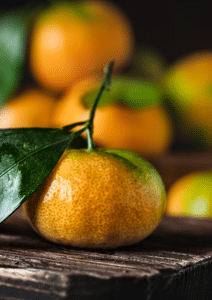
How I Care for Our Citrus at VanZylStead Now — So Winter Rewards Us
If you’ve been following VanZylStead for a while, you’ll know our citrus trees are not just trees. They’re part of our rhythm. The lemons for winter honey tea. The naartjies the kids peel on the stoep. The oranges we squeeze on cold mornings.
But here’s what I’ve learned over the years — winter citrus is built in late summer. Right now, in February, I slow down and pay attention to our citrus. Because what I do now determines what we pick in winter.
Let me walk you through exactly what that looks like here at VanZylStead.
Feeding — And What Happens If You Don’t
Citrus are heavy feeders. They are not shy about needing nutrients.
If we don’t feed now, this is what happens:
-
Fruit stays small
-
Fruit drops before ripening
-
Leaves turn pale or yellow
-
Rinds get thick
-
Fruit lacks sweetness
And I’ve seen it happen.
We use a good quality slow-release organic fertiliser around the drip line. I don’t rush feeding. I want nutrients that release steadily over time, not a quick green flush that disappears.
And then — something very close to my heart — kelp. If you know us, you know I love walking the beach. And when the tides bring in fresh kelp, I collect it. I rinse it well to remove excess salt, chop it up, and either soak it to make a gentle kelp tea or lay it under the mulch around the trees.
Why kelp? Because it’s full of trace minerals. It strengthens the tree. It improves stress tolerance. It supports root health. Citrus hate stress — and kelp helps them cope with heat, wind and irregular weather.
I’ve found our trees respond beautifully to it.
Watering — Deep Roots, Not Surface Sprinkles
Citrus don’t want daily sprinkles. They want deep, meaningful watering. Here at VanZylStead, we water slowly and deeply so the moisture reaches the root zone. Shallow watering encourages shallow roots — and shallow roots mean stressed trees.
Under every fruit tree, including our citrus, I keep a thick layer of wood chips. Wood chips are gold. They:
-
Regulate soil temperature
-
Reduce evaporation
-
Encourage fungal networks
-
Feed soil life slowly over time
Wood chips have completely changed how our orchard holds moisture. Even in hot spells, when I push my hand under that layer, the soil stays cool and alive.
Citrus don’t like wet feet — but they do like consistent moisture. Wood chips help me maintain that balance.
Pruning — Gently and With Clean Tools
February is not the month for aggressive pruning.
I walk around each tree and remove:
-
Dead branches
-
Crossing branches
-
Water shoots
-
Suckers below the graft
And I do it gently.
I’ve learned the hard way that heavy pruning at the wrong time reduces fruiting and stresses the tree. Citrus respond better to light shaping and airflow improvement. And something I never skip — cleaning my tools. Before moving from one tree to the next, I wipe my secateurs with disinfectant or a vinegar solution. Disease spreads easily between cuts. Clean tools protect your orchard.
Pruning is not about cutting. It’s about observing. And I always stand back after pruning and ask, “Does this tree feel balanced?”
Mulch — You Know I Can’t Stop Talking About It
If you’ve followed VanZylStead long enough, you know mulch is practically a personality trait of mine. I cannot talk enough about mulch.
Under our citrus trees you’ll find:
-
Compost layer
-
Wood chips
-
Leaves
-
Sometimes chopped kelp
Mulch feeds the soil. And healthy soil feeds the tree. It suppresses weeds (which compete for nutrients), protects roots from heat stress, supports microbial life and builds soil structure. Healthy soil is like our immune system. If the soil is strong, the tree is strong.
And strong trees handle pests and stress better.
Pests — The Aphid, Ant & Sooty Mould Story
Let me tell you something I’ve seen often in our orchard.You’ll spot aphids on soft new growth. And then you’ll notice ants. Ants farm aphids. They protect them. Why? Because aphids produce honeydew — a sugary substance ants feed on.
That honeydew then leads to sooty mould — that black, sticky coating on leaves. So when I see ants running up and down the trunk, I know to look closely. It’s not just aphids. It’s a relationship.
That’s when I step in. I use neem oil — but not randomly. Read more here on neem oil [1]
Neem works because:
-
It disrupts insect feeding
-
It interferes with their life cycle
-
It reduces egg laying
-
It deters further infestation
I spray early morning or late afternoon to avoid leaf burn. And I focus under leaves where pests hide.
But I also break the ant cycle — sometimes with barriers around the trunk.
And again, the most powerful thing?
Spending time under your trees. You are your best pest control.
When Trees Don’t Fruit — Our Naartjie Story
We have a naartjie tree that tested my patience. For years, it grew beautifully. Glossy leaves. Strong branches. But fruit? Almost nothing. I had to step back and reassess. I changed the fertiliser to a proper slow-release citrus blend. I made notes about our watering. I realised we were watering inconsistently during hot spells.
Citrus hate inconsistency. I corrected that. I mulched heavier. I fed properly. I paid attention. And slowly, the fruit started coming. It reminded me that citrus are long-term relationships. Not quick-return crops. Sometimes the tree just needs time. Sometimes it needs adjustment. But most of all — it needs consistency.
Citrus at VanZylStead
At VanZylStead, we don’t rush the garden.
We walk it. We observe. We adjust.
Right now, in February, I:
-
Feed properly with slow-release fertiliser
-
Add kelp for mineral support
-
Water deeply
-
Refresh wood chip mulch
-
Prune gently
-
Watch for aphids and ants
-
Clean my tools
-
Make notes
Because winter harvest is built now. And there is nothing more satisfying than standing in the orchard on a cold morning, picking your own lemons, knowing you did the quiet work months ago.
That’s how we care for citrus here.
Slowly. Intentionally. And with soil first.
From our Garden to Yours