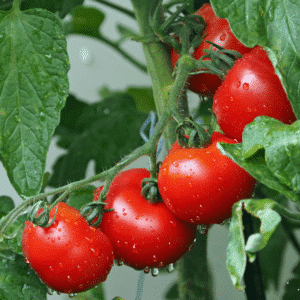
Tomatoes are one of the most satisfying crops for me to grow in the garden. This season, we have 36 plants in the garden, which will be used to make tomato paste, pizza sauce, pasta sauce, and so much more.
Tomatoes are not immune to pests and disease and with companion planting you can not only increase the flavour of your tomatoes, but also deter some pests.
My top companions for tomatoes
Basil
- Basil’s strong smell deters many pests that eat tomatoes, including tomato hornworms, aphids, thrips, and spider mites.

- Basil can enhance the flavor of tomatoes.
- Basil flowers attract pollinators, which can help maximize tomato yield.
- Basil and tomatoes complement each other well in cooking and are often used together in dishes like caprese salad, bruschetta, and tomato basil soup.
Borage
- Borage attracts pollinators like bees and butterflies, and beneficial insects which can improve tomato growth and help to control pests.
- Borage releases calcium and potassium into the soil, which can help tomatoes and other plants fight disease. Borage is also a source of B vitamins, beta-carotene, choline, and trace minerals that can improve soil.
- Borage can work as a living mulch in the tomato patch.
- Borage enhances the flavour of tomatoes.
Marigolds – Afrikanertjies
- The strong smell of marigolds deters pests like whiteflies, thrips, aphids, tomato hornworms, and rabbits.
- The bright colors of marigolds attract pollinators like bumble bees, which also visit tomato plants.

- Marigolds repel parasitic root-knot nematodes, which are attracted to marigolds and away from tomatoes.
- Marigolds release compounds in the soil that kill and repel parasites.
- Marigolds and tomatoes have similar growing conditions.
Chives
- Chives repel pests like aphids, spiders, mites, slugs, and Japanese beetles that can damage tomato growth and fruiting. Chives contain sulfur-based oils that give them their strong onion-like fragrance.
- When chives flower, they attract pollinators like bumblebees that help pollinate tomato flowers.
- Chives are said to improve the flavor of tomatoes.
Lettuce
- Tomato plants provide shade for lettuce, which protects the leaves from burning and prevents the lettuce from bolting, or flowering, which makes the leaves bitter and dry.
- Lettuce helps regulate soil moisture, which is beneficial for tomato growth. Lettuce’s roots also retain water in the top layers of soil.
Other companion plants that will benefit tomatoes are radish, carrots, asparagus and Parsley. When you choose a companion plant it is important for you not to plant tomatoes near other plants that compete for resources. Consider the companion plant’s light, water, and nutrient requirements.
Take note not to plant tomatoes with potatoes. Tomatoes and potatoes are susceptible to the same pests and diseases, and planting them together increases the chance of potato blight disease. Plants in the Brassica family (Cauliflower, Broccoli, Kale and Cabbage) compete with tomatoes for nutrients and can stunt their growth, avoid planting them close to your tomatoes.
Tomatoes are a joy to grow, and the perfect plant to grow and preserve for the winter months.
Happy Tomato Growing Friends
Tash & Family