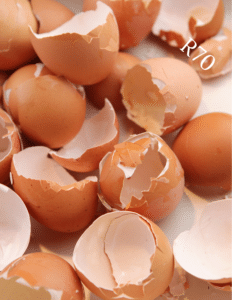
If you’ve spent any time in a gardening Facebook group, you’ve probably seen it.
“Save your eggshells!”
“Crush them around your tomatoes!”
“They stop slugs!”
“They’re packed with calcium!”
Poor little eggshells have become one of the biggest celebrities in the gardening world. They’re praised as everything from a miracle fertiliser to an all-natural pest control. But… how much of it is actually true?
Let’s crack into the facts.
First things first… what are eggshells made of?
An eggshell is made up of around 95% calcium carbonate, the same material found in agricultural lime. The remaining few percent consists of proteins and trace minerals like magnesium and phosphorus.
So yes, eggshells are absolutely rich in calcium. The catch? Just because something contains nutrients doesn’t mean your plants can use them immediately.
The biggest myth: Eggshells are a quick fertiliser
This is probably the biggest misunderstanding. If you crush eggshells and sprinkle them around your plants today, your tomatoes won’t suddenly have more calcium tomorrow. Eggshells break down incredibly slowly. In fact, large pieces can still be sitting in the soil years later looking almost exactly the same. The calcium is locked inside the shell and only becomes available once microbes, moisture and time slowly break it down. Think of it like burying a log. Eventually it becomes beautiful compost. But not this season.
Can eggshells prevent blossom end rot?
This one surprises many gardeners. Blossom end rot—the black patch on the bottom of tomatoes, peppers and squash—is caused by a calcium deficiency inside the developing fruit. Surely adding eggshells fixes it? Unfortunately not. The problem is usually not that the soil lacks calcium. More often, the plant simply cannot move calcium into the fruit because of inconsistent watering, drought stress or damaged roots. Adding fresh eggshells around a tomato plant won’t solve the problem during that growing season.
The best prevention is surprisingly simple:
- Keep watering consistent.
- Mulch the soil.
- Avoid letting plants dry out completely before watering again.
- Build healthy soil with compost.
Healthy roots move calcium far better than a handful of eggshells.
What about slugs?
You’ve probably heard that slugs hate crawling over sharp eggshells. It sounds logical. Unfortunately, researchers haven’t found much evidence that crushed eggshells stop slugs. In reality, after a bit of rain and weather, the shells soften and lose their sharp edges. Many gardeners have even watched slugs crawl straight across them without a second thought. If slugs are a real problem, there are much more effective solutions, such as beer traps, hand-picking, copper barriers or iron phosphate pellets. We like to use Biogrow Ferramol
So… are eggshells useless?
Not at all! They’re just often used in the wrong way. Eggshells are actually a fantastic ingredient in a healthy compost system. Once compost microbes have months to work on them, they gradually release calcium back into the finished compost. You’re recycling nutrients instead of sending them to landfill. And that’s a win.
My favourite way to use eggshells
Instead of throwing them straight into the garden, I like to:
- Rinse them after breakfast.
- Leave them to dry completely.
- Crush them into small pieces.
- Add them to my compost, Bokashi or worm farm (worms don’t eat the shells themselves, but the fine grit helps in the system and eventually ends up back in the compost).
If you really want them to break down faster, grind them into a fine powder using an old coffee grinder or blender. The smaller the particles, the larger the surface area, which means microbes can work much faster.
Do eggshells change soil pH?
Technically yes… But only very slowly. Because they’re made mostly of calcium carbonate, eggshells can have a liming effect over time. However, they are nowhere near as effective or predictable as agricultural lime. If a soil test shows your soil is acidic and needs correcting, proper garden lime is still the better option.
Fun facts you might not know
- One eggshell contains roughly 2 grams of calcium.
- It can take months—or even years—for whole eggshells to fully break down in garden soil.
- Chickens actually need calcium to make more eggs. Many chicken keepers bake and crush old shells before feeding them back to their flock as part of a balanced calcium source.
- Eggshells are almost pure natural limestone.
So… should you save your eggshells?
Absolutely. Just don’t expect miracles. Think of eggshells as a long-term investment rather than an instant fertiliser. Every shell you compost is another little bit of nutrition finding its way back into your soil. Gardening isn’t about finding one magical ingredient. It’s about adding lots of small improvements over time—compost, mulch, healthy soil biology, good watering habits and patience. The funny thing is, the best gardens are usually built one banana peel, one handful of compost… and yes, one humble eggshell at a time.
Want to learn more?
At VanZylStead, we’re passionate about helping South Africans grow food successfully—without falling for every gardening myth that pops up online. Inside our membership, digital magazines and workshops, we dive into the science behind gardening in a simple, practical way, so you know not just what to do, but why it works.Because when you understand your garden, growing your own food becomes so much more rewarding.
Happy gardening!