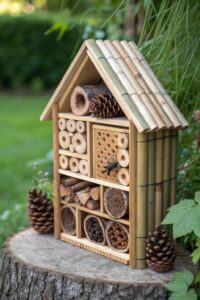
When we get excited about summer gardening, we usually think about sowing tomatoes, harvesting cucumbers, feeding our strawberries and filling every empty space with vegetables. But have you ever stopped to think about the tiny creatures that help make all of that possible? I’m talking about the bees, ladybirds, lacewings, hoverflies and all the other little insects that quietly work behind the scenes every single day. The truth is, a productive vegetable garden isn’t just about healthy plants. It’s about creating a healthy ecosystem. And one of the easiest ways to do that is by adding two simple things to your garden this summer: a bug hotel and a water station.
A Five-Star Hotel… for Bugs!
Now I know what you’re thinking…
“Tash, why on earth would I want to invite bugs into my garden?”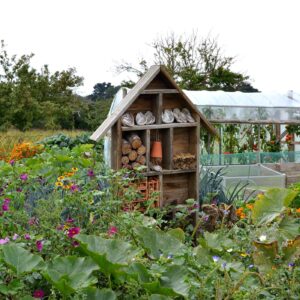
The answer is simple. Not all bugs are bad! In fact, some of the hardest-working members of your gardening team are insects. Ladybirds can eat dozens of aphids every day. Lacewing larvae are so good at controlling pests they’re often called “aphid lions.” Hoverflies are brilliant pollinators, and their larvae happily feast on aphids too. Then there are our solitary bees, quiet little pollinating machines that help increase harvests without making a fuss. The problem is that all these helpful insects need somewhere to rest, shelter from the heat, lay their eggs and sometimes even spend the winter.
That’s exactly what a bug hotel provides.
You don’t need anything fancy either. A few bamboo canes, drilled pieces of wood, pine cones, bark, sticks and straw packed into a small wooden frame can become the perfect home for your garden’s helpful visitors. Think of it as opening a little guesthouse for nature!
Don’t Forget the Drinks!
Now imagine checking into a beautiful hotel, and there’s no water. Summer can be tough on insects. Just like us, they need somewhere to stop for a drink. One of the simplest things you can do is place a shallow bowl or saucer of water somewhere in the garden. Add a handful of pebbles or small stones so insects have safe places to land while they drink. Without the stones, many tiny insects simply can’t reach the water safely. Keep it topped up through the hotter months, and you’ll be amazed how quickly your little visitors find it.
Feed Your Tiny Visitors Too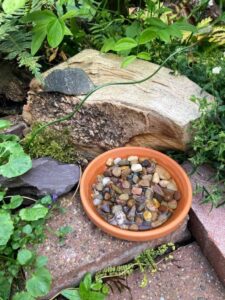
If you’ve built them a hotel and given them something to drink, why not provide a restaurant as well? Plant flowers around your vegetable garden. Calendula, alyssum, borage, cosmos, marigolds, lavender, dill and coriander all attract beneficial insects and pollinators. In fact, one of my favourite gardening tips is to let a few herbs flower instead of harvesting every last leaf. Those flowers become a magnet for bees and hoverflies. The more flowers you have, the more life your garden attracts.
Nature Knows What It’s Doing
One of the biggest lessons gardening has taught me is that nature is all about balance. If we create a garden full of life, nature often helps us solve many of our pest problems. More ladybirds usually means fewer aphids. More bees means better pollination. More hoverflies means healthier vegetables. Instead of fighting nature, we start working with it.
This Summer…
As you’re planting your tomatoes, cucumbers and beans, take a few minutes to think about the tiny helpers that will be working alongside you all season. Build a bug hotel. Put out a shallow bowl of fresh water. Plant a few extra flowers. It doesn’t take much effort, but it makes a world of difference. After all, every thriving vegetable garden needs a few happy guests… even if they have six legs!
Want to learn more?
This is just one of the practical tips you’ll find in our monthly VanZylStead Digital Magazine. [1] Every edition is packed with seasonal gardening advice, step-by-step projects, growing guides, DIY ideas and practical tips to help you grow more food with confidence. Join us and let’s keep growing together.
Happy Gardening Friends
Tash en die Familie