
There is something incredibly satisfying about digging around in the soil and discovering sweet potatoes hiding underneath! And the best part? They’re surprisingly easy to grow, especially during our warm South African summers. But one question I get asked quite often is: Do you really need to grow sweet potato slips first, or can you simply plant a piece of sweet potato that’s already starting to sprout?
Well, let’s talk sweet potatoes, because there’s a little more to them than simply popping one into the ground!
First, Sweet Potatoes Are Not Regular Potatoes!
Although they share a name, sweet potatoes and ordinary potatoes are completely different plants. Regular potatoes grow from seed potatoes or pieces containing eyes. Sweet potatoes, on the other hand, are usually grown from slips – young shoots that grow from a mature sweet potato. These shoots develop roots and eventually become new plants that produce their own sweet potatoes underground. And here’s something interesting: sweet potatoes belong to the morning glory family, which explains those beautiful trailing vines!
What Exactly Is a Sweet Potato Slip?
A slip is simply a young shoot that grows from a sweet potato. If you’ve ever left a sweet potato in the kitchen for too long and noticed little green shoots appearing, congratulations, you’ve already started the process! Once those shoots reach around 15–20 cm long, you can carefully twist or cut them off and encourage them to develop roots. And that’s what you’ll plant in your garden.
But Can You Just Plant the Sprouting Sweet Potato?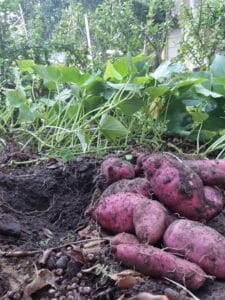
Yes, you can! But there’s a catch. If you have a sweet potato that’s already sprouting, you can plant the whole sweet potato or a sprouting section directly into warm soil. The shoots may continue growing and produce vines. However, this isn’t necessarily the best way to get a good harvest. When you plant the original sweet potato, it can rot underground, particularly if the soil stays too wet. You may also end up with crowded growth and poorly shaped storage roots.
My recommendation? Use that sprouting sweet potato to grow slips first. One sweet potato can give you several new plants, which means a much better opportunity to spread them out and grow a lovely harvest.
How I Grow My Sweet Potato Slips – The Water Method
This is my favourite way to get sweet potatoes started, and I love that you can actually watch the roots and shoots developing!
- Choose a healthy, firm sweet potato, preferably one that’s already showing signs of sprouting.
- Insert three or four toothpicks around the middle of the sweet potato.
- Suspend it over a glass or jar of water, with the bottom third to half sitting in the water.
- Place the jar somewhere warm with plenty of bright, indirect light.
- Top up the water as needed and replace it regularly to keep it fresh.
After a few weeks, you should start seeing roots developing in the water and little shoots appearing from the sweet potato. And this is where the fun begins! Once those shoots reach around 15–20 cm long, gently twist them off the sweet potato. Place the individual shoots into a separate glass of clean water, making sure the lower nodes are submerged but the leaves stay above the water. Within several days to a couple of weeks, you should start seeing roots developing along the stems. Once they have a healthy little root system, they’re ready to be planted in the garden!
And the best part? One sweet potato can produce several slips, giving you multiple plants from just one sweet potato.
Can You Also Grow Slips in Soil?
Absolutely! If you prefer, you can lay a sweet potato on its side in a shallow container filled with a loose, well-draining growing medium. Cover the bottom half with soil, keep it slightly moist and place it somewhere warm. As shoots develop, remove them once they’re long enough and root them separately before planting. Both methods work, but I love the water method because it’s so simple, and you can see exactly what’s happening.
When Should We Plant Sweet Potatoes in South Africa?
Sweet potatoes love warmth! They grow best when the soil is warm, the days are long and there’s no danger of frost. For those of us gardening in the Western Cape, November is a lovely time to get them growing, and you can generally continue planting into early summer. In warmer, frost-free parts of South Africa, the planting season can be longer. Sweet potatoes need roughly 4–5 months of warm growing weather, depending on the variety and conditions, so don’t leave planting too late if you want a good harvest before the colder weather arrives.
How to Plant Your Sweet Potato Slips
Once your slips have developed roots, it’s time to get them into the garden!
- Choose a sunny spot. Sweet potatoes love sunshine, so aim for at least six hours of direct sunlight daily.
- Prepare your soil. They prefer loose, well-draining soil. Add some mature compost if your soil needs improving, but don’t overdo the feeding.
- Plant your slips. Space them approximately 30 cm apart, with around 75–100 cm between rows if you’re planting several.Bury a few nodes along the lower stem, leaving the top leaves above the soil. Roots will develop from those buried nodes.
- Water them in well. Keep the soil consistently moist while the slips establish themselves. Once growing strongly, sweet potatoes are fairly drought-tolerant, although regular moisture helps produce a better harvest.
- Add mulch. A layer of mulch will help retain moisture, protect the soil and reduce weeds.
And then? Give them space to grow! Sweet potato vines can spread quite enthusiastically, so they’re wonderful for covering open soil.
This is one of the biggest mistakes gardeners make with sweet potatoes, to much nitrogen. We see those beautiful green vines growing and think everything must be going wonderfully underground. But that’s not always the case! Too much nitrogen can encourage masses of leafy growth at the expense of developing sweet potatoes. So don’t keep feeding them high-nitrogen fertilisers. Focus on healthy soil, moderate fertility and consistent watering instead.
Can You Grow Sweet Potatoes in Containers?
Absolutely! If you don’t have much garden space, a large container or grow bag can work beautifully. Choose a container at least 40–50 cm deep and wide, with good drainage. Bigger is generally better because those storage roots need space to develop. Use a loose, well-draining growing medium, plant one or two slips depending on the container size, and let the vines trail over the edges. Just remember that containers dry out much faster than garden beds, especially during our hot, windy Cape Town summers.
When Are Sweet Potatoes Ready to Harvest?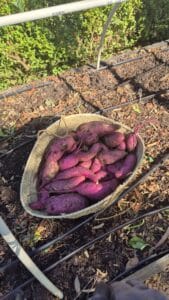
This is where a little patience comes in! Most varieties take around 100–150 days to mature, although some need longer. You may notice the vines slowing down or leaves starting to yellow, but these aren’t always reliable signs of maturity. The best way to check is to gently explore around one plant and see how the storage roots are developing. When harvesting, loosen the soil carefully with a garden fork, starting away from the main plant. Sweet potatoes have delicate skins and can bruise easily.
And here’s an important tip: Sweet potatoes benefit from curing after harvest. Curing them in a warm, humid, well-ventilated environment for several days helps heal small wounds, improves storage life and encourages their sweetness to develop. Avoid leaving freshly harvested roots in direct sun.
Remeber! Sweet potato leaves are edible! The young, tender leaves and growing tips can be cooked much like spinach. They’re lovely sautéed with a little garlic and olive oil. Just don’t strip the vines bare if you’re hoping for a good sweet potato harvest underground!
So, Slips or Sprouting Sweet Potatoes?
If you have a sweet potato sitting in your kitchen that’s starting to grow, don’t throw it away! Use it to grow your own slips. Yes, you can plant the sprouting sweet potato directly, but growing slips gives you more plants, better spacing and generally more reliable results. And that’s one of the things I love most about growing food. Sometimes an entire harvest can begin with one forgotten sweet potato in the kitchen cupboard! For the healthiest start, choose disease-free planting material whenever possible, particularly if you plan to keep propagating sweet potatoes from your own harvests.
Happy gardening!
Tash en die Familie
Our VanZylStead Guide to Growing Veggies is a eGuide filled with tips on how to start and maintain your veggie garden. Get your copy here [1]