My top 5 natural pest control hacks for the new growing season
A new growing season means new seedlings, loads of growth and hopefully plenty of food coming from the garden. Unfortunately, it also means the pests are back! Over the years I have learned that pest control doesn’t have to mean reaching for a chemical spray every time you see something eating your plants.
I always prefer to begin naturally. Observe. Catch the problem early. And only step things up when you really need to.
Here are five of the things I’m doing in our garden this growing season.
1. Pheromone traps for fruit fly and false codling moth
These have become such an important part of my pest-control routine. I use pheromone traps from Livingseeds, and our traps are already filling up with fruit flies and false codling moths. The important thing to understand is that these traps aren’t simply there to kill insects. They are also a fantastic monitoring tool.
When I start seeing insects appearing in the traps, I know they are active in the garden and I need to pay closer attention to susceptible fruit and vegetables. Getting ahead of the problem is much easier than discovering it once your fruit has already been damaged.
2. Slugs and snails – beer AND cucumber
Everyone knows the beer trick. Sink a small container into the soil, add some beer and slugs and snails are attracted to it.
But I’m experimenting with something else this season. Chunks of cucumber. I’ve been leaving pieces of cucumber around areas where I know slugs are active. They seem to be very attracted to the cucumber, which means I can come back later, find them gathered around it and simply collect them.
It doesn’t necessarily eliminate the problem, but it’s a very simple way of concentrating them in one place so I can remove them. And if you’ve been following VanZylStead for a while, you’ll know I love experimenting with simple things like this to see what actually works in OUR garden.
3. Aphids – start with water
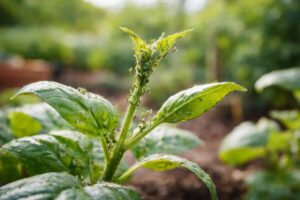
Aphids can multiply incredibly quickly. That is why I keep a spray bottle filled with water close to the veggie garden. As soon as I spot the first few aphids, I give them a good, strong spray with water and knock them off the plant. If you catch an infestation very early, sometimes that is all you need.
The mistake is waiting until there are hundreds of them. If I’ve been away from the garden for a few days and suddenly discover a much bigger infestation, I’ll move on to something stronger. I keep neem oil on hand for situations like this, but I still use it carefully and according to the label.
Remember: natural doesn’t automatically mean harmless. Neem can affect beneficial insects too, so don’t spray simply because you see one or two aphids. Start with water.
4. Cutworms – protect those young seedlings
Oh, cutworms. They can be SUCH a pain at the beginning of the growing season. You plant out your beautiful little seedlings, come back the next morning and find one lying on the ground, neatly cut off at soil level.
One of the simplest things I do is save toilet rolls. Cut them into smaller collars and place them around your young seedlings, pushing the bottom slightly into the soil. This creates a physical barrier around the stem while the seedling is still small and vulnerable.
I’m also scattering African wormwood around some of my young seedlings this season. Will it completely stop cutworms? Probably not. But I’m experimenting with it as an additional deterrent alongside the physical barriers. And if you find a freshly cut seedling, scratch around in the top few centimetres of soil nearby. You may find the culprit curled up underneath the soil.
5. Birds – sometimes netting is the only answer
Then we have the birds. Especially the mousebirds. Trust me, I have tried different things in our garden. When they decide that my young seedlings are lunch, very little seems to stop them. The most reliable solution I have found is simply to physically keep them out.
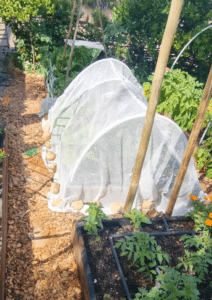
I make simple hoops over my raised beds and pull bird netting over them. The seedlings still get light, water and airflow, but the birds can’t reach them. Once the plants are bigger and less vulnerable, I can remove the protection.
Probably my biggest pest-control hack isn’t actually a product at all. Walk through your garden. Look underneath leaves. Check your seedlings. Look at your fruit. Notice holes, curled leaves, droppings or insects that weren’t there yesterday. Most pest problems are much easier to manage when you catch them at the beginning.
You don’t need to panic every time you see an insect either. A healthy garden is supposed to have insects. The goal isn’t a sterile garden. The goal is balance. And sometimes the simplest solution — a bottle of water, a toilet roll, a piece of cucumber or some netting — is all you need.
Need more help this growing season?
Our VanZylStead Guide to Growing Veggies is packed with what we have learned from more than a decade of growing food in our own suburban garden. From planning and soil to seedlings, pests, feeding, watering, harvesting and everything in between, it’s the guide I wish I had when we started.
Should you remove the first flowers from young vegetable plants? You bring home a beautiful little tomato, pepper or aubergine seedling from the nursery and notice something exciting: It already has flowers! Surely that's a good thing? Flowers mean fruit is...
Nematodes in the veggie garden – what now? A few days ago I walked into the veggie garden and noticed something strange with my spinach. Most of the plants looked absolutely fine. In fact, during the day I didn't really take much notice of them because I knew I was...






0 Comments