

My Umbrella Fig recently started losing all its leaves, and I was worried I was going to lose this beautiful indoor plant. Upon closer inspection, I noticed that the soil deeper in the container was soggy. I stopped watering immediately, and fortunately, my plant began to recover and is now growing new leaves again. I haven’t changed the soil yet, but I’ll monitor her condition over the next few weeks. She currently has seven new leaves.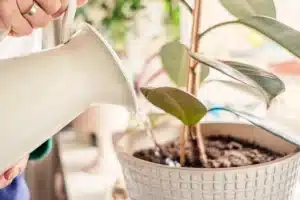
Root rot is one of the most common and damaging issues for indoor plants, often leading to wilting, yellowing leaves, and plant death if not treated in time.
The main factors that contribute to root rot in indoor plants include overwatering, poor drainage, fungal infections, compacted soil, and unsuitable environmental conditions. Overwatering leads to excess moisture in the soil, which can suffocate the roots and create an environment conducive to fungal growth. If the pot lacks drainage holes or the soil retains too much water, the roots remain wet for an extended period.
Pathogens such as Pythium, Phytophthora, and Fusarium thrive in soggy soil, attacking weakened roots. Compacted soil, often dense and old, prevents proper aeration, trapping excess moisture and leading to root suffocation. Moreover, cold temperatures can slow down root function, while high humidity encourages further fungal development, creating a challenging situation for indoor plants.
It’s essential to catch root rot early before it spreads. Look out for symptoms such as yellowing or wilting leaves, even with regular watering, as the plant may appear unhealthy. Check the roots—healthy ones should be firm and white, while rotted roots turn black, brown, or slimy and feel soft and mushy. A foul, rotten smell coming from the soil is another warning sign, indicating bacterial or fungal decay. Additionally, stunted growth or sudden leaf drop can occur due to a lack of nutrient absorption, weakening the plant.
How to Treat Root Rot
Remove the Plant from Its Pot
Carefully lift the plant from the soil and inspect the roots. If the roots are mushy, black, or smelly, root rot has set in. Sterilized scissors or pruning shears cut away all diseased roots, leaving only healthy, white roots behind.
Treat with Fungicide or Hydrogen Peroxide
Soak the remaining roots in a diluted hydrogen peroxide solution (1 part 3% hydrogen peroxide to 2 parts water) or use a natural fungicide like cinnamon or activated charcoal to prevent reinfection.
Repot in Fresh, Well-Draining Soil
Choose a new pot with drainage holes and use fresh, well-aerated soil like a cactus or orchid mix, depending on your plant type. Avoid compacted or moisture-retaining soil.
Adjust Watering Habits
Water only when the top 2-3 cm of soil feels dry to prevent overwatering. Use pots with drainage holes and avoid letting your plant sit in standing water.
To prevent root rot, water only when needed by checking the soil’s moisture—if it still feels damp, wait before watering. Use well-draining soil by mixing in perlite, sand, or orchid bark to improve drainage. Choosing the right pot is also crucial; always opt for pots with drainage holes to prevent water buildup. Keep humidity in check, avoiding excessive moisture in the air, especially in cold conditions. Lastly, sterilize tools and pots before repotting to prevent fungal spread and keep your plants healthy.
Root rot is a serious issue, but early detection and proper care can save your indoor plants. By ensuring proper drainage, using the right soil, and adopting better watering habits, you can prevent root rot and keep your plants healthy. If your plant is severely affected and loses most of its roots, propagation may be the best way to save it.
Happy gardening Friends,and enjoy all those indoor plants


0 Comments