You know how it goes. You plant your spinach, it grows beautifully, you start harvesting, and then suddenly the summer heat arrives and your spinach decides it’s had enough! Before you know it, it’s bolting, going bitter, and you’re starting all over again. But what if I told you there are two leafy greens that actually LOVE the heat? And even better, they are both perennial plants in the right climate, meaning you can plant them once and enjoy harvests for years.
Let me introduce you to Chaya Spinach and Malabar Spinach. Now, neither of these is actually a true spinach, but both can be used as leafy greens in the kitchen. And with our hot South African summers, I think they deserve a little more attention in our veggie gardens!
1. Chaya Spinach – Have You Ever Heard of a Spinach Tree?
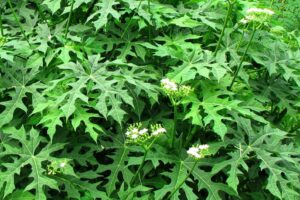
Yes, you read that correctly. A spinach tree! Chaya (Cnidoscolus aconitifolius) comes from Central America, particularly Mexico, where it has been grown and eaten for generations. And unlike the spinach we’re used to, this one doesn’t grow in neat little rows close to the ground. It grows into a big, beautiful shrub that can reach 2–3 metres tall.
Imagine having a spinach bush growing in your garden that you can keep harvesting from! What I particularly like about Chaya is that once established, it is relatively low maintenance. It loves warm weather, can tolerate some dry conditions and responds beautifully to regular pruning. And the more you prune and harvest, the more you encourage fresh growth.
So, how do we grow Chaya?
First, give it a nice sunny spot. It enjoys full sun but will also grow in partial shade. If your garden gets extremely hot in summer, a little afternoon shade won’t hurt. As always, let’s start with the soil! Add plenty of compost before planting and make sure the soil drains well. Chaya doesn’t enjoy sitting in waterlogged soil. When it’s young, you’ll need to water regularly to help it establish a good root system. Once mature, it becomes more drought-tolerant, although regular watering will still give you better leaf production.
And you know what I’m going to say next…
MULCH!
A good thick layer of mulch around the plant will help keep the soil cool, retain moisture and slowly improve your soil as it breaks down. Chaya can become quite a large shrub, so don’t be scared to cut it back. Pruning will encourage it to become bushier and produce more tender leaves.
Can I grow Chaya from cuttings?
Absolutely! In fact, this is one of the easiest ways to grow it. Take a healthy, mature stem cutting, allow the cut end to dry and callus, and then plant it in a well-draining growing medium. Keep it somewhere warm and water carefully while it develops roots. And there you have it. Another plant for your garden, or perhaps one to share with a gardening friend!
Now, something VERY important about Chaya!
You cannot eat Chaya spinach raw. Unlike ordinary spinach, Chaya contains naturally occurring cyanogenic compounds that can release toxic hydrogen cyanide. This means the leaves must be properly cooked before eating. Boil them in plenty of water for at least 15–20 minutes, discard the cooking water, and follow reliable preparation guidance. Never use raw Chaya in smoothies, salads or green juices. Some varieties also have tiny irritating hairs on their leaves and stems, so wearing gloves when harvesting is a good idea.
And what can we do with it in the kitchen?
Once properly cooked, you can use Chaya much like ordinary cooked spinach. Think creamy spinach with a little garlic, adding it to soups and stews, or simply serving it as a side dish with olive oil and lemon. The leaves are nutritious too, providing protein, fibre, calcium, iron and other valuable nutrients. Not bad for a plant that can keep producing for years!
2. Malabar Spinach – The Spinach That Wants to Climb!
Now, this one is completely different, and I think it’s such a fun plant to grow! Malabar spinach (Basella alba) is a beautiful climbing vine with thick, glossy green leaves. You also get a red-stemmed form, often called Basella rubra, which is particularly attractive in the garden. And here’s why I think more people should be growing it. It grows UP instead of taking up valuable space in your veggie beds! If you have a small garden, a courtyard or even a sunny balcony, Malabar spinach could be a wonderful addition.
Give it a trellis, fence or arch, and watch it climb. In warm conditions, the vines can grow several metres long, giving you plenty of leaves to harvest throughout summer.
Why is Malabar spinach so special?
Well, for starters, it absolutely loves the heat. While our normal spinach is struggling through summer, Malabar spinach is often at its happiest. It grows quickly, produces lots of leaves and looks beautiful while doing it. But there’s one thing to remember. Although it enjoys hot weather, it also likes moisture. So don’t confuse heat-loving with drought-loving!
Let’s get it growing!
Start with a sunny spot that gets around 5–6 hours of sunlight a day. Some afternoon shade can be beneficial during really hot weather. Prepare your soil with plenty of compost. Remember, we’re growing leaves, so we want healthy, fertile soil that supports continuous growth. Keep the soil consistently moist, especially during summer. And yes, once again, mulch is your friend! Because Malabar spinach is a climber, you’ll need to give it something to grow on. A trellis, an arch, some strong string or even a fence will work beautifully. I can just imagine it growing over one of our veggie garden arches!
And here’s another little tip. Pinch off the growing tips regularly. This encourages the plant to branch out instead of producing one long vine. More branches mean more leaves to harvest!
Can we grow Malabar spinach from seed?
Yes, and it’s quite easy! Sow the seeds during warm weather, once the soil has warmed up. You can soak the seeds overnight before planting to help soften their seed coats. Plant them about 1–2 cm deep in a good seed-starting mix and keep the soil moist. Germination can take around one to three weeks, depending on the temperature.
You can also grow Malabar spinach from cuttings. Simply take a healthy stem cutting, remove the lower leaves and place it in water or moist growing medium. In warm conditions, it usually roots quite readily.
How do we harvest it?
This is the lovely part. You don’t have to pull out the entire plant! Simply pick the leaves as you need them or snip off the tender growing tips. Regular harvesting encourages more branching and fresh growth. Just make sure you leave enough leaves behind for the plant to continue growing.
Now, don’t expect it to taste exactly like the spinach you buy at the supermarket. Malabar spinach has thicker, juicier leaves and a slightly slippery texture when cooked, a little like okra. Some people absolutely love it, while others need a little time to get used to the texture. The young leaves can be eaten raw in salads, and the larger leaves are lovely in stir-fries, curries and soups. Try frying some garlic and ginger in a little olive oil, adding your Malabar spinach leaves and finishing with a squeeze of lemon. Simple, fresh and straight from your garden!
But Will These Plants Survive Our South African Winters?
This is where we need to be a little careful. Both Chaya and Malabar spinach are perennial plants in warm, frost-free climates. But that doesn’t necessarily mean they’ll survive winter in every part of South Africa. Chaya is a woody shrub that can continue growing for years in a suitable climate, but frost can damage it. Malabar spinach is a tender perennial, and in cooler areas it’s often grown as a summer annual. Here in the Western Cape, where we have hot, dry summers and cooler, wetter winters, I would definitely think about where I plant them.
Chaya would be happiest in a warm, sheltered position protected from cold winds. Malabar spinach could be grown over a trellis during summer, and you can collect seeds or take cuttings to start again the following season. If you live somewhere with regular frost, growing these plants in containers that you can protect during winter might be worth considering.
Why I Think We Should Be Growing More Perennial Vegetables
Something I’ve been thinking about more and more is how we can make our veggie gardens work a little harder for us. We spend so much time planting seeds, raising seedlings, transplanting, watering and harvesting. And then, a few months later, we’re doing it all over again! Now, don’t get me wrong. I absolutely LOVE growing our seasonal vegetables.
But wouldn’t it be wonderful if we also had more permanent food-producing plants in our gardens? Think about asparagus, artichokes, perennial herbs and even sweet potatoes in suitable climates. And now we can add Chaya and Malabar spinach to the list. By combining annual vegetables with perennial plants, we can create gardens that are more diverse, productive and, in many cases, easier to maintain. Of course, perennial doesn’t mean maintenance-free. They still need healthy soil, water, feeding and a little attention.
But the idea of planting something once and enjoying repeated harvests is rather appealing, don’t you think? And here’s another thing I love about growing our own food. We get to grow vegetables that we might never find on supermarket shelves! There is a whole world of edible plants out there, and sometimes we get so used to growing the same tomatoes, lettuce, carrots and beans that we forget to experiment. So perhaps this summer, instead of planting another row of ordinary spinach, why not try something a little different?
You might just discover your new favourite vegetable!
Happy gardening!
Tash en die Familie
Want to grow more of your own food but not sure where to start? Our VanZylStead Guide to Growing Veggies takes you through everything from soil preparation to planting and harvesting. And when pests or diseases come knocking, our SOS Garden Guide is there to help!
Two guides to help you grow a healthier, more productive veggie garden!
You have been watching your tomatoes grow for weeks. The plants look beautiful, the leaves are green, and finally, those little tomatoes are getting bigger. You can almost taste that first homegrown tomato! And then one morning, you notice something strange. The...
It's that time of the year again! You walk past your baby marrow plant in the morning, and there is a lovely little baby marrow growing. You think, "I'll pick that tomorrow." Well, tomorrow arrives, and that innocent little baby marrow has turned into something the size of a rugby ball!
And let's be honest, by now you've made baby marrow fritters, roasted baby marrow, stuffed baby marrow, added it to every possible dinner, and even the neighbours have started avoiding eye contact because they know you're about to offer them ANOTHER baby marrow! So what do we do with all these baby marrows?
We make CHOCOLATE BROWNIES!
Yes, you read that correctly. Baby marrow in chocolate brownies. And before you turn up your nose, I promise you won't even taste the vegetables. The baby marrow makes these brownies beautifully moist, rich and fudgy.
And the best part? You can tell yourself you're eating your vegetables while enjoying chocolate cake!
This content is for Subscriber and Annual Subscriber members only. Join Now
With the hot, dry summer we're expecting and possibly very little rain, there is one thing I really want every gardener to focus on: BUILD YOUR SOIL! We can water our gardens, put up shade nets and mulch our beds, but if the soil underneath is unhealthy, our plants...










0 Comments