

Scientifically known as *Tillandsia*, air plants comprise a fascinating group of over 700 species from South America, the southern US and the Carribbean. They have captured the hearts of many plant enthusiasts, including my own. Air plants seem almost otherworldly in the way they grow—without any soil at all. Instead, they thrive solely in air. Additionally, their leaves resemble alien tentacles or the appendages of an exotic sea creature.
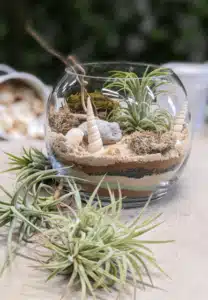
Airplants absorb all their water and nutrients through their leaves and they grow epiphytically or as lithophytes, making them low-maintenance, visually appealing additions to any home or garden. Air plants can attach themselves to various structures, such as trees, rocks, and fences. However, they do not feed off their hosts for survival; their root-like structures serve only as anchors.
Nowadays, air plants are often displayed on seashells, driftwood, or nestled within terrariums. Contrary to popular belief, air plants do require moisture and nutrients to grow properly; they cannot survive on air alone. Air plants thrive because of tiny scales on their leaves called trichomes, which act like reservoirs, capturing water and nutrients from the air.
Do air plants flower?
Yes, air plants can produce beautiful, brightly colored flowers that attract hummingbirds, moths, and even bats in their natural environment. The timing of flowering varies greatly among different varieties. Individual Tillandsia plants flower once. After flowering, you will notice new growth as multiple new plants, known as “pups,” will start to develop tucked within the lower leaves of the mother plant. These pups can be removed once they reach about one-third the size of the mother plant, or you can leave them attached to create an appealing cluster.

Choosing Your Air Plants
Air plants come from two distinct environments: mesic and xeric. The type of plant you select will determine how much light it needs and how often you should water it—both of which are very important!
- Mesic air plants thrive in moderate moisture environments. They have a smoother, shinier, and greener appearance.
- In contrast, xeric air plants originate from dry environments. They tend to be fuzzier, duller, and have a grayish-green to gray color. A fun fact about xeric plants is that their silvery coating helps reflect sunlight and keeps the leaves cooler!
Mesic air plants require bright, indirect light and more moisture, while xeric air plants can tolerate direct morning sun and need to be watered less frequently.
Caring for Air Plants
Air plants are low-maintenance, but they still require some basic care to thrive.
- Watering


The soaking method is a popular way to water air plants. To do this, fully immerse the plant in a bowl of clean, room-temperature tap water, rainwater, or distilled water with added nutrients if needed. After soaking, allow the plant to dry completely, ideally within a few hours, by placing it upside down. In very dry environments, you can lightly mist your air plant with water between soakings. However, never leave your air plant sitting in water for extended periods, as this can cause root rot.
Air plants with fuzzy leaves and a silvery or dusty surface are considered xeric types, which thrive in dry climates with little rainfall. Their prominent trichomes allow them to collect and store ample water for dry spells. These types require less frequent watering and can tolerate direct sunlight.
- Lighting
Light is essential for air plants as it plays a vital role in photosynthesis—the process through which they convert carbon dioxide and water into the energy required for growth. Like most plants, air plants rely on adequate light to produce the nutrients they need to thrive. Without sufficient light, they may experience stunted growth, fading colors, and potentially death.
Most air plants prefer bright, indirect light, which mimics the filtered sunlight they receive in their natural habitats on tree branches. Direct sunlight, especially during the hottest part of the day, can scorch their leaves. Conversely, low light conditions can result in weak, leggy growth and dull colors.
The silvery hairs, known as trichomes, covering the leaves of air plants assist in water absorption but can also filter out some light. Therefore, these plants require a good amount of light to compensate for this effect.
- Fertilizing Air Plant


Fertilizer can help air plants thrive, but it is not essential for their survival. It can promote blooming, which is when air plants produce pups—small offsets that can develop into new plants. Additional nutrients may assist air plants in creating new leaves and maintaining their health. It is recommended to fertilize at a quarter strength of the dosage suggested for ornamental plants, using it as a foliar feed.
- Air circulation
Air circulation is essential for air plants as it enables them to properly utilize their trichomes. In simple terms, good airflow is necessary for these plants to “breathe” effectively and thrive in their environment, where they depend on air for hydration.
Historically, the Incas, Aztecs, and Mayans utilized various parts of *Tillandsia usneoides* (commonly known as Spanish moss) for food, protection, fibers, and ceremonies. The renowned botanist Carl Linnaeus named these plants “tillandsias” in 1738, in honor of the Finnish physician and botanist Dr. Elias Tillandz, who had an aversion to water.
Rare & Air is based in KwaZulu-Natal and specializes in growing quality air plants, which are delivered directly to your door. They provide tips and advice on how to grow and care for your air plants, offering a stunning variety to enhance your collection, whether you are a novice or an experienced grower.
I have a wall in my house that I am going to ill with these stunning, weird-looking, and low-maintenance beauties. Visit their online store and order yours today
Happy Gardening, Friends! Whether you garden indoors or outdoors, enjoy your time with plants!
Tash & Family


0 Comments