Can You Really Save Money by Growing Your Own Vegetables?
One of the questions I get asked quite often is whether growing your own vegetables actually saves you money. And I think it is a very fair question, because if you walk into a nursery today and start adding raised beds, bags of soil, compost, fertilisers, seedlings, irrigation, tools and pest-control products to your trolley, you could very easily spend a small fortune before you’ve harvested a single tomato.
So yes, I absolutely believe growing some of your own food can save you money, but it depends very much on how you start, what you grow and how much you think you need to buy to make it happen.
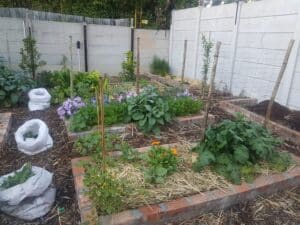
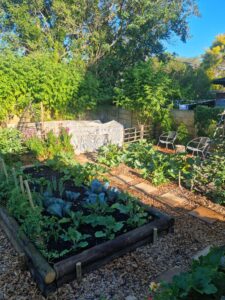
When we started growing food at VanZylStead more than 11 years ago, our garden looked nothing like it does today. We didn’t wake up one Saturday morning and suddenly have raised beds, fruit trees, composting systems, worm farms, trellises and chickens. Everything you see in our garden today has been built slowly, over many seasons, and there have been plenty of mistakes along the way.
That’s actually why I want to write about this, because I don’t want someone to look at an established veggie garden and think, I could never afford to do that. You don’t have to start with the garden you eventually want. You simply need to start with the garden you can manage now.
How much space do you actually need?
You really don’t need a huge garden to start growing food. If you have one small sunny patch of soil, you can start there. If you don’t have open ground, a few containers can be enough to get you going. Even one square metre can produce a surprising amount of food when you plan it properly and keep replanting as crops finish.
Before spending any money, I would actually spend a little time looking at your space. Watch where the sun falls during the day, especially because this changes through the seasons. Think about where your water source is and choose somewhere that you’ll walk past regularly. A veggie garden tucked away in a forgotten corner of the property is very easy to forget about, while one you see every day tends to get far more attention.
If you’re using containers, they don’t need to be expensive decorative pots. There are plenty of containers that can be repurposed for growing, provided they are suitable, have adequate drainage and are deep enough for the crop you’re planting. Your tomato really doesn’t care whether its container matches your outdoor furniture.
Don’t spend a fortune trying to save money
This is probably the biggest trap for new gardeners. We get excited, go shopping and suddenly feel that we need everything at once. The beautiful raised beds, fancy irrigation system and lovely gardening tools are wonderful if your budget allows for them, but none of those things determines whether you can successfully grow food.
If your goal is partly to reduce what you’re spending on fresh produce, then the setup of your garden needs to make financial sense too. I would much rather see someone spend their money on improving poor soil and buying a few good seeds than spend most of their budget making the garden look beautiful.
There is also absolutely nothing wrong with building your garden slowly. Add another bed next season. Install irrigation later if you find you need it. Buy a trellis when your climbing plants actually require one. Your veggie garden doesn’t need to be finished before you start growing in it. Ours certainly wasn’t, and to be honest, I don’t think a vegetable garden is ever really finished.
Start by looking inside your fridge
If saving money is important to you, this is one of the best places to start. Before deciding what you’re going to grow, have a look at what your family actually buys and eats every week.
If you’re constantly buying spinach, lettuce, herbs, tomatoes and spring onions, those are worth considering. If nobody in your house eats beetroot, then growing an entire bed of beetroot because somebody told you it is easy to grow isn’t going to save you anything.
I always think the question shouldn’t simply be, What can I grow? It should be, What are we regularly buying that I could potentially grow?
For one family, fresh herbs could make a noticeable difference. We all know how often you buy a packet of herbs for one recipe, use half and discover the sad remains at the back of the fridge a week later. Having parsley, basil or chives growing outside means you can simply cut what you need and leave the rest growing.
Choose vegetables that keep giving
When you’re working with limited space or trying to get good value from your garden, vegetables that allow repeated harvesting are wonderful.
Swiss chard is a great example. Instead of pulling out the entire plant, you can harvest the larger outer leaves and allow the centre to continue producing. Many loose-leaf lettuces can be harvested in a similar way, and herbs can give you repeated harvests over a long period when they’re looked after properly.
Beans are another crop I love because they’re so easy to start from seed, and a few healthy plants can give you repeated harvests. Tomatoes obviously have a special place in our garden too. They require a little more attention, but once a healthy plant starts producing, you can harvest from it over an extended period.
This doesn’t mean you shouldn’t grow crops that are harvested once. We grow plenty of those too. It simply means that if I only had a tiny growing space and wanted to get as much food as possible from it, I would think carefully about how long each plant will occupy that space and how much it is likely to give me in return.
Seeds can make your money go a long way
Growing from seed is one of the easiest ways to stretch your gardening budget. One packet can potentially give you many plants, and you certainly don’t need to sow the entire packet at once.
This is where succession planting becomes incredibly useful. Instead of sowing 30 lettuces and having all 30 ready at roughly the same time, sow a few and then sow another small batch a couple of weeks later. Now you’ve started creating a continuous supply rather than one enormous harvest followed by nothing.
As you become more experienced, you can also start learning about saving your own seed from suitable plants. Suddenly one plant isn’t simply giving you food; it may also be giving you the seed for another growing season. That is when you start seeing just how beautifully a garden can begin supporting itself.
Your kitchen can feed your garden too
This is probably one of my favourite parts of growing food, because once you start gardening, you begin looking at so-called waste completely differently. At VanZylStead, we compost, use worm farms and bokashi, and make some of our own feeds. You absolutely do not need to start with all of those systems, but even introducing one simple composting method can make a difference over time.
Kitchen scraps, garden waste and dry leaves can become valuable organic matter instead of simply leaving your property in a bin. Once properly composted, that material goes back into your soil, where it helps you grow more food. You’re taking something you would have thrown away and turning it into something you might otherwise have had to buy.
That is one of the ways a veggie garden starts saving money that we don’t always think about.
Yes, you can make some of your own fertilisers
You also don’t necessarily need to buy every feed your garden will ever need. There are things we can make ourselves, and this is something we’ve incorporated into our own garden over the years.
Comfrey is a good example. We grow it in the garden and use the leaves to make a homemade liquid feed. We also use our worm systems, where the castings are an incredibly useful resource for building healthy soil and supporting our plants. Compost itself is another form of feeding the garden because you’re continually returning organic material and nutrients to the soil.
Homemade doesn’t automatically mean that you should use as much as you like, though. This is something worth understanding. Even natural feeds need to be used appropriately, and different plants have different requirements at different stages of growth. More fertiliser does not necessarily mean more vegetables.
One of the best things you can learn as a gardener is how to recognise what your plants actually need rather than simply feeding them because it’s Tuesday and the bottle says so.
Use what you already have
Once you’ve been growing for a while, you become very good at looking at things and wondering whether they could have another life in the garden.
Cardboard can be incredibly useful when establishing certain no-dig areas or sheet mulching. Dry leaves are valuable organic material. Suitable food scraps can go through your compost, worms or bokashi system. Old containers can sometimes become growing pots, and depending on what you’re growing, simple stakes and supports can often be made from materials you already have.
This doesn’t mean everything needs to look homemade or that you should never spend money on your garden. We certainly do. It simply means that before buying something, it’s worth asking whether you already have something that could do the same job.
Over a whole growing season, those small decisions add up.
Make a small garden work harder
One of the ways we get more from the space we have at VanZylStead is by growing vertically. If something can climb instead of taking over half a bed, I am very happy to send it upwards.
Beans, cucumbers and indeterminate tomatoes are good examples of plants that can make use of vertical space. We use arches, trellises and other supports throughout our garden, which means the ground underneath and around those plants can often be used more efficiently too.
You can also think about the timing of crops. While a tomato is still small, for example, there may be space around it for something quicker-growing. Once that smaller crop has been harvested, the tomato has more room to take over.
A small veggie garden doesn’t have to mean a small harvest. It just means you need to think a little more carefully about how you use the space.
If I only had R500, where would I start?
This is an interesting question because I think my answer would surprise some people.
If somebody gave me R500 tomorrow and said, Tash, you have to start a veggie garden from scratch, I would not spend most of it on a beautiful raised bed or fancy containers.
I would first look at what I already had. Do I have a suitable patch of ground? Do I have containers I can reuse? What is my existing soil like? Do I already have compostable material that I can start collecting? Only once I knew that would I start spending the money.
If the soil needed help, that’s where I’d put a good portion of my budget. Then I’d buy a small selection of seeds for vegetables we actually eat, perhaps a few seedlings to give me an immediate start, and I’d begin there.
I wouldn’t try to build my dream veggie garden with R500. I’d use R500 to start a garden that could grow with me.
There is a big difference.
But does it REALLY save money?
I think we need to be realistic here. Growing your own food isn’t a magical way to halve your grocery bill overnight, and not every vegetable you grow will necessarily work out cheaper than the supermarket version.
Your first season may involve some setup costs. You’ll make mistakes. Some seeds won’t germinate. Something will eat a seedling you were ridiculously proud of. You may discover that the spot you chose doesn’t get enough sun or that you’ve planted far too much of something your family doesn’t actually eat.
That’s gardening.
The savings become more noticeable as the garden matures and you become a better gardener. You start making your own compost. You learn to grow from seed. You stop buying things you don’t actually need. You learn which crops perform well in your garden and which aren’t worth the space. You start harvesting herbs, salad leaves, tomatoes or spinach instead of putting them into your shopping trolley every week.
Slowly, your garden begins giving more back while requiring less unnecessary spending.
And that’s where I think the real value lies.
There is another kind of value too
After more than 11 years of growing food, I don’t measure the value of our garden only by what we would have paid for the vegetables we harvest.
There is something incredibly satisfying about walking outside at five o’clock and deciding what you’re going to add to dinner based on what’s ready in the garden. There is value in children knowing that a carrot doesn’t begin its life in a plastic bag. There is value in understanding your soil, watching the seasons change and seeing kitchen scraps eventually become compost that grows another meal.
And there is something very grounding about growing food.
Some seasons are brilliant. Some aren’t. Sometimes you harvest baskets of tomatoes, and sometimes you spend weeks fighting whitefly and wondering why you ever thought gardening was relaxing. 😂
Over the years, I’ve realised that one of the biggest things stopping people from growing food isn’t necessarily money or space. Often, they simply don’t know where to begin.
Where should the veggie garden go? Should you use raised beds, plant directly into the ground or grow in containers? What soil do you need? Do you start with seeds or seedlings? How do you water correctly? What should you feed your plants? What do you do when pests arrive? And how can you use things like kitchen scraps to help build a more sustainable garden?
Those are exactly the kinds of questions we wanted to answer in the VanZylStead Guide to Growing Veggies. We’ve taken what we’ve learned from more than a decade of growing food in our own suburban garden and put it together in one practical guide to help you start — and, more importantly, to help you keep going.
Because you really don’t need a huge property or a huge budget to grow food.
You don’t need to create the garden you see at VanZylStead today. Start with the garden you can afford today. It might be one small bed, three containers or even just a few herbs outside the kitchen door.
Then learn. Add. Grow. That’s exactly how we started. And more than 11 years later, we’re still growing.
What Is Your Veggie Garden Trying to Tell You? Part 1: Read the Leaves One thing I do almost every morning is walk through the veggie garden. Sometimes with coffee in hand, sometimes while I’m actually supposed to be doing something completely different, but I always...
October is one of those months when the veggie garden suddenly feels as though everything should be planted. The days are longer, the soil is warming up, seedlings are everywhere in the nurseries, and summer is just around the corner. But just because you can find a...
Raised Beds, In the Ground or Containers – Where Should You Grow? When people decide they want to start growing vegetables, one of the first questions is usually: Where am I actually going to grow them? Do I need raised beds? Can I simply plant into the soil I already...










0 Comments