Pest Control Starts Long Before You See the First Pest!
If there is one thing I have learnt over the years of growing our own food, it is that the best pest control starts long before you see the first aphid, caterpillar or snail. I often get asked what we spray in our garden to keep pests away. And yes, there are a few products we use, but spraying is actually a very small part of how we manage pests at VanZylStead.
For us, pest control starts with the soil, the way we plant, the insects we invite into our garden and, probably most importantly, the time we spend walking through it. I always say that you don’t need a completely pest-free garden to have a successful veggie garden. You need a garden that is healthy enough to cope with a little damage, and a gardener who knows when to step in.
Your soil is your garden’s immune system
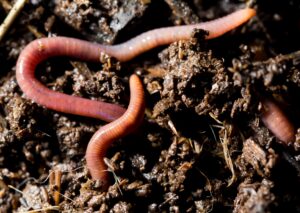
Think about your own body for a moment. When you eat well, look after yourself and have a healthy immune system, your body is generally better equipped to deal with challenges. Your garden works in a similar way. Healthy soil is the foundation of healthy plants. When your soil is alive with earthworms, beneficial microorganisms, fungi and plenty of organic matter, your plants have a much better chance of developing strong roots, accessing nutrients and coping with stress.
A plant that is struggling because of poor soil, inconsistent watering or a nutrient imbalance can become more vulnerable to certain pests and diseases. That is why we spend so much time building our soil at VanZylStead. We use homemade compost, worm castings, bokashi and organic matter to feed the soil. We practise no-dig gardening wherever possible, because we want to protect the soil structure and the life beneath the surface.
We also mulch our beds. Mulch helps regulate soil temperatures, reduces moisture loss and gradually breaks down to add more organic matter. But here is something important: Healthy soil does not mean you will never have pests. Even the healthiest garden will attract insects. What healthy soil does is give your plants a stronger foundation to grow, recover and tolerate some damage.
And remember, more fertiliser is not always better. Too much nitrogen can encourage lots of soft, tender growth that aphids absolutely love! Our aim is to grow balanced, healthy plants, not simply the biggest leaves possible.
Prevention starts when you plant
One of the easiest ways to manage pests is to think about them before putting your seedlings into the ground.
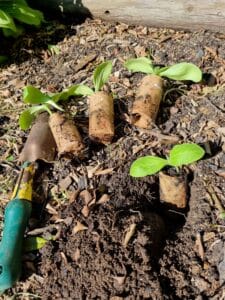
Something we have used in our garden for years is the humble toilet paper roll! When planting young seedlings, especially those that are vulnerable to cutworms, we place a toilet roll around the stem, pushing the bottom slightly into the soil. Cutworms often feed at night, cutting through tender young stems close to soil level. The cardboard creates a physical barrier around the seedling during those vulnerable first weeks. As the plant grows, the cardboard gradually softens and breaks down.
It costs practically nothing, and it is a lovely way to reuse something that would otherwise be thrown away. We also pay attention to spacing. It is tempting to squeeze just one more tomato or baby marrow into a bed, but overcrowding creates problems. Poor airflow, excess humidity and leaves touching everywhere can encourage disease and make it difficult to spot pests.
Giving plants enough space, watering consistently and avoiding unnecessary stress are all part of pest prevention. I also believe in changing where we grow certain crops from season to season. Crop rotation can help interrupt the life cycles of pests and diseases that remain in the soil or on old plant material.
Invite the good insects before the bad ones arrive
One of the biggest mistakes we can make in a veggie garden is thinking that every insect is a problem. Some of the insects you see are actually doing a wonderful job protecting your vegetables.
Ladybirds and their larvae feed on aphids. Lacewing larvae are excellent predators of soft-bodied pests. Hoverfly larvae also feed on aphids, while many tiny parasitic wasps help control caterpillars and other pests.
But these insects need somewhere to live and something to eat. That is why we grow flowers and herbs throughout our vegetable garden. At VanZylStead, we love including calendula, alyssum, cosmos, nasturtiums and marigolds. We also allow herbs such as dill, fennel and basil to flower. These flowers provide nectar and pollen for beneficial insects, helping to create a more balanced garden ecosystem. We also avoid spraying unnecessarily. Even products described as natural or organic can harm beneficial insects if they are sprayed directly.
If you kill every insect in your garden, you may also be killing the very insects that would have helped you control the next pest outbreak. Sometimes the best pest control is simply allowing nature enough time to do its job.
Netting is one of our favourite preventative tools
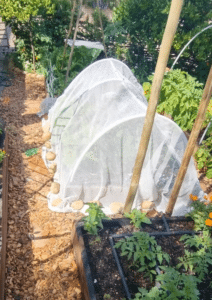
If you have ever grown cabbage, broccoli, cauliflower or kale, you will know how quickly caterpillars can cause damage. Instead of waiting until the leaves are full of holes, we prefer to prevent the butterflies from reaching our plants in the first place. We use fine insect netting over hoops to protect vulnerable crops, particularly our brassicas. The important thing is to put the netting on early, preferably immediately after planting, before butterflies have had a chance to lay their eggs.
Make sure the netting is secured around the edges and does not rest directly against the leaves. Butterflies can sometimes lay eggs through netting if the leaves are touching it. Netting is also useful for protecting young seedlings from certain beetles and other flying pests. Remember to check underneath your netting regularly. If pests were already present when you covered the plants, you may have trapped them inside! And if you cover crops that need insect pollination, such as baby marrows and cucumbers, you will need to remove the netting during flowering or hand-pollinate.
African wormwood – one of our garden favourites
African wormwood, also known as wilde-als (Artemisia afra), is one of the plants we have spoken about often at VanZylStead. It is a wonderfully aromatic indigenous plant, and we use it as part of our natural gardening approach. We sometimes scatter cut leaves around vulnerable plants, and we also make a simple wormwood tea by steeping the leaves and stems in hot water, allowing it to cool and straining it before use.
Traditionally, gardeners have used this as a homemade spray to try to discourage pests such as aphids and whiteflies. I see it as another tool in our preventative gardening routine rather than a guaranteed insecticide.
Walk your garden every day – it is your best early warning system
This is probably one of the most valuable pieces of advice I can give anyone growing vegetables. Walk your garden. Every single day, if you can. You don’t need to spend an hour inspecting every leaf. Sometimes ten minutes with a cup of coffee is enough. Look at your plants. Turn over a few leaves. Check the new growth. Notice if something looks different from yesterday.
Are there tiny yellow eggs underneath your cabbage leaves? Are the tips of your beans covered in aphids? Are there new holes in your spinach? Is a tomato leaf curling, or are there little black droppings on the leaves?
These are all clues. When I see butterfly eggs on our brassicas, I simply rub or squash them off with my fingers. If I spot a small caterpillar, I remove it by hand. If a leaf is badly infested, sometimes it is easier to remove that leaf. A few minutes spent doing this can prevent a much bigger problem later. And remember, not every egg is a pest egg. Ladybirds, lacewings and other beneficial insects also lay eggs in the garden, so learn to recognise what you are looking at before removing everything.
Aphids? My first treatment is usually water!
Aphids are one of those pests that seem to appear overnight. You check your plants one day and everything looks wonderful. The next day, the tender growing tips are covered in little green or black insects. But I don’t immediately reach for an insecticide.
My first step is usually to take the hose and give the affected area a firm spray of water. This knocks many of the aphids off the plant and can make a big difference, especially when you catch them early. You need enough pressure to dislodge the aphids without damaging the plant. I then check the plant again over the next few days and repeat if necessary.
I also look for ladybirds and their larvae. If they are already feeding on the aphids, I sometimes leave a small colony alone and let them do their work. If the infestation continues to grow, then I consider another treatment. The point is that not every pest problem needs a bottle of something.
Go on a night patrol!
Some of the most destructive pests in your vegetable garden are the ones you hardly ever see during the day. Cutworms, slugs, snails and certain caterpillars are much more active after dark. If you wake up to find seedlings cut off at soil level, or leaves that have mysteriously been eaten overnight, grab a torch and visit your garden after sunset. You might be surprised by what you find!
We have often spoken about night patrols at VanZylStead because they are such a simple way to identify what is actually eating your plants. Look underneath leaves, around the base of plants, along the edges of raised beds and beneath pots. Cutworms often hide just below the soil surface near the damaged plant during the day. Slugs and snails can be collected by hand, and caterpillars can often be removed before they do more damage. A night patrol also helps you avoid treating the wrong pest.
Identify your pest before you treat it
This is incredibly important. Not all holes in leaves are caused by caterpillars. Not every yellow leaf means there is an insect problem. And not every tiny creature in your garden needs to be removed. Before choosing a treatment, ask yourself what is causing the damage.
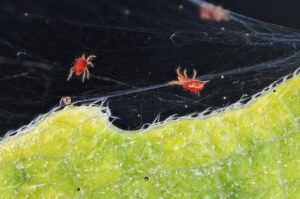
Caterpillars often leave irregular holes and dark droppings. Aphids usually gather around soft new growth and underneath leaves. Spider mites can cause fine stippling, sometimes accompanied by delicate webbing. Slugs and snails leave irregular holes and sometimes silvery slime trails. Flea Beelte make small holes in leaves
Also look at the conditions around your plants. A tomato plant with curled leaves may be responding to heat, watering stress or pruning rather than insects. If you treat a watering problem with an insecticide, you haven’t solved anything. This is why learning to read your plants is just as important as learning to identify pests.
What we use for pest control at VanZylStead
Although prevention is always our first choice, there are times when we need a little extra help. We prefer to start with the least disruptive solution and only use a pest-control product when we know what we are treating.
These are three of the products we use in our garden.
1. Biogrow Bioneem (Neem)
One of the products we use at VanZylStead is Biogrow Bioneem. It doesn’t kill insects immediately like some sprays do. Instead, it contains azadirachtin, which interferes with how certain pests feed, grow and develop, eventually reducing their numbers. We use it to help manage pests such as aphids, whiteflies, spider mites and certain other sucking and chewing insects, provided the specific pest and crop are covered by the product label.
I always try spraying aphids and whiteflies off with water first. If I need to use Bioneem, I spray during the early morning or late afternoon, never in the heat of the day. Make sure you spray underneath the leaves too, because that is where many pests hide. Bioneem works gradually, so don’t expect instant results. Follow the label for mixing and repeat applications, and avoid spraying beneficial insects and pollinators.
Remember, even organic products should only be used when necessary!
2. Biogrow Pyrol
Another product we keep on hand at VanZylStead is Biogrow Pyrol. Unlike neem, Pyrol works much faster, killing pests through direct contact. It contains natural pyrethrins and canola oil, which help control pests by affecting their nervous systems and, in the case of the oil, coating small pests.
We use it for more serious infestations of aphids, whiteflies, spider mites and other listed sucking or chewing pests, depending on the crop and product label. I only spray when necessary, preferably early in the morning or late in the afternoon, making sure to reach underneath the leaves where pests love to hide. Always follow the mixing and application instructions on the label.
Remember, Pyrol can also kill beneficial insects, including ladybirds and other garden helpers, so I avoid spraying the whole garden and only treat affected plants when needed.
3. Margaret Roberts Biological Caterpillar Insecticide
Another product we use at VanZylStead is Margaret Roberts Biological Caterpillar Insecticide, especially when caterpillars start damaging our cabbage, broccoli, cauliflower and kale. It contains Bacillus thuringiensis (Bt), a naturally occurring bacterium. Unlike contact sprays, the caterpillars need to eat the treated leaves for it to work. Once ingested, it damages their gut, causing them to stop feeding and eventually die.
It works best on young, actively feeding caterpillars, so I always encourage gardeners to catch infestations early. I prefer spraying late in the afternoon, making sure to cover the leaves properly, especially underneath where young caterpillars often hide. Always follow the mixing and application instructions on the label.
What I like about Bt is that it is more targeted than broad-spectrum insecticides, helping us protect many of the beneficial insects in our garden. However, it can also harm butterfly caterpillars, so only spray where necessary.
A little damage is not the end of the world
I think social media sometimes gives people the wrong impression of what a vegetable garden should look like. Perfect cabbage leaves. Spotless tomatoes. Not a single hole in the spinach. But that is not always what a real, productive garden looks like. Our garden has insects. We have leaves with holes. We have caterpillars, aphids, snails and the occasional plant that simply doesn’t make it.
And that is okay. A few aphids are not necessarily a disaster. A caterpillar nibbling on one leaf doesn’t mean you are going to lose your entire harvest. What matters is learning to recognise when a pest population is becoming a problem and understanding how to manage it before serious damage occurs.
The longer I garden, the more I realise that successful pest control is not about eliminating every insect. It is about creating balance.
Prevention will always be better than treatment
If you take one thing away from this article, I hope it is this, don’t wait until your garden is under attack before you start thinking about pest control. Start with your soil. Feed it, protect it and keep building organic matter. Give your plants enough space, water them properly and grow flowers that invite beneficial insects into your garden. Use netting when you know a crop is vulnerable. Protect your young seedlings. Remove pest eggs before they hatch.
And above all, spend time in your garden. Get to know what healthy growth looks like. Learn which insects are your friends and which ones are causing damage. Sometimes all you need is a hosepipe, a pair of hands and ten minutes of your time.
After more than a decade of growing food in our own suburban garden, I can tell you that these small habits make an enormous difference. You will never prevent every pest, but you can create a garden that is healthier, more productive and much easier to manage.
And isn’t that what we all want?
In our VanZylStead Guide to Growing Veggies, we go into much more detail about building healthy soil, understanding your plants, preventing pests and diseases, companion planting and practical ways to care for your vegetable garden throughout the growing season. We share the methods we have learnt and used in our own garden, helping you understand not just what to do, but why you are doing it. Because growing your own food should be something you enjoy, not a constant battle against pests!
In our first two articles, we discovered the incredible world living beneath our feet and how bacteria, fungi, earthworms and plant roots work together to support our vegetables. Today, I want to bring all of that back into our own gardens. Because here's something...
In our previous article, we spoke about the incredible world of bacteria, fungi, earthworms and other tiny organisms living beneath our feet. But have you ever wondered how all this underground life actually helps feed your vegetables? We spend so much time thinking...
There's a whole world beneath your feet! When we look at our vegetable gardens, we see the tomatoes growing, the lettuce pushing out new leaves and perhaps a few carrots starting to show their shoulders above the ground. But have you ever stopped to think about what...












0 Comments