In our previous article, we spoke about the incredible world of bacteria, fungi, earthworms and other tiny organisms living beneath our feet. But have you ever wondered how all this underground life actually helps feed your vegetables? We spend so much time thinking about what fertiliser to give our tomatoes, whether our spinach needs more nitrogen and how often we should feed our peppers. Yet some of the most fascinating work in our gardens happens where we can’t see it.
And here’s something worth thinking about: What if growing healthier vegetables isn’t always about feeding the plants more, but about creating soil that helps plants feed themselves?
Your plants are running an underground restaurant!
This is one of my favourite things about soil biology. Plants use sunlight to produce sugars through photosynthesis. Some of that carbon eventually finds its way into the soil through their roots in the form of sugars, organic acids and other compounds called root exudates.
These substances help shape the community of microorganisms living around the roots, in an area scientists call the rhizosphere. Think of your tomato plant running its own little underground restaurant! Certain bacteria and fungi benefit from the compounds released by the roots. In return, some of these microorganisms help plants access nutrients, stimulate root development or protect against particular diseases.
And here’s a lekker fact: Plants can change what they release through their roots depending on their growing conditions and nutrient needs.
So, while we’re standing above ground deciding what to feed our plants, those roots are already interacting with an entire community beneath the surface.
It makes you look at a tomato plant a little differently, doesn’t it?
The fungi that work like an extra root system
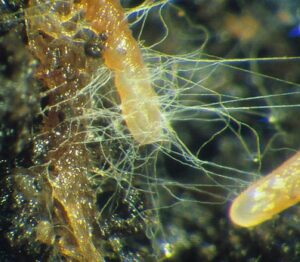
Now this is fascinating! Some soil fungi form partnerships with plant roots. They’re called mycorrhizal fungi, and they produce incredibly fine threads known as hyphae. These threads extend into the surrounding soil, exploring tiny spaces that roots cannot easily reach. They can help plants absorb nutrients, particularly phosphorus, and sometimes improve access to water.
In exchange, the plant provides the fungi with sugars produced during photosynthesis. It’s a wonderful example of two completely different organisms benefiting from one another. But did you know that not every vegetable forms these partnerships?
Tomatoes, peppers, carrots and onions commonly associate with mycorrhizal fungi. Cabbage, broccoli, cauliflower and kale, on the other hand, generally don’t.
We often see mycorrhizal products advertised as something every garden needs. But if you’re growing brassicas, adding these fungi isn’t going to create the same root partnership. And even with vegetables that do form these relationships, healthy soil may already contain suitable fungi.
Sometimes the best thing we can do is protect what’s already there.
Your beans have their own little nitrogen factories
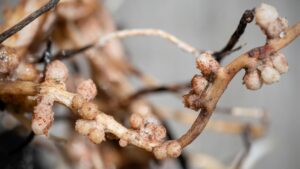
Have you ever pulled out a bean or pea plant and noticed tiny bumps attached to the roots? Those little bumps are called nodules, and some contain bacteria that perform an extraordinary job. They take nitrogen gas from the air and convert it into a form the plant can use. This process is called biological nitrogen fixation. Think about that for a moment. The air around us is approximately 78% nitrogen, yet most plants cannot use nitrogen gas directly. They need nitrogen in forms such as nitrate or ammonium.
But certain bacteria have developed a way to make atmospheric nitrogen available to their plant partners. And here’s another interesting fact: Inside an actively fixing nodule, you may find a pink or reddish colour. This comes from leghemoglobin, a substance that helps regulate oxygen so the nitrogen-fixing process can take place.
It’s almost like a tiny laboratory operating inside the roots! However, there’s a common gardening myth worth clearing up. Planting beans next to your tomatoes doesn’t automatically mean the tomatoes are receiving free nitrogen. Much of the nitrogen fixed by the bacteria is used by the bean plant itself. Some nitrogen may become available to other plants through root turnover, decomposition and other processes, but it isn’t an instant fertiliser delivery service.
There’s an entire food chain beneath your vegetables
We often think of bacteria and fungi as the smallest workers in our soil, but did you know that other organisms are feeding on them? Protozoa, certain nematodes and other tiny soil creatures consume bacteria, fungi and organic material. As they feed, grow and release waste, nutrients are continually recycled. This is part of what we call the soil food web.
Imagine an earthworm moving through the soil, bacteria breaking down a piece of old leaf, a tiny nematode feeding on microorganisms and fungal threads exploring the spaces between soil particles. All of this can be happening underneath a single lettuce plant! And here’s something I find particularly interesting: not all nematodes are bad. We often hear about root-knot nematodes damaging our vegetables, but many nematodes are beneficial or harmless. Some feed on bacteria, others on fungi, and certain species even prey on other soil organisms.
So when we talk about healthy soil, we’re not talking about eliminating everything we can’t see. We’re talking about encouraging a balanced and diverse underground ecosystem.
Why more fertiliser isn’t always the answer
Now, let’s bring this back to our own veggie gardens. Imagine your tomato plant starts showing yellow leaves. Your first thought might be that it needs nitrogen, so you give it another dose of fertiliser. But what if the problem isn’t a shortage of nutrients? Perhaps the soil has been kept too wet and the roots aren’t getting enough oxygen. Perhaps the soil pH is making certain nutrients less available, or the roots are struggling in compacted ground.
Adding more fertiliser won’t necessarily solve any of those problems. In fact, excessive fertiliser can create additional stress. Too much nitrogen may encourage excessive leafy growth, while high concentrations of soluble salts can damage roots. Here’s something to remember: Nutrients can be present in your soil without being readily available to your plants. This is where soil chemistry, moisture, root health and biological activity all come together.
I’m certainly not suggesting we should stop fertilising our vegetable gardens. We grow hungry crops, harvest regularly and remove nutrients every time we pick tomatoes, spinach or peppers. But feeding our plants and caring for our soil should go hand in hand.
Can your soil actually help protect your plants?
Here’s another fascinating part of the story. Some beneficial soil microorganisms compete with disease-causing organisms for food and space. Others produce compounds that inhibit certain pathogens or stimulate a plant’s natural defence responses. Scientists refer to the ability of some soils to limit particular diseases as disease suppressiveness. It doesn’t mean healthy soil will magically prevent every disease. But it does remind us that a diverse soil ecosystem can contribute to a more resilient garden.
And that’s one of the reasons I love adding compost, keeping my soil covered and avoiding unnecessary disturbance. We’re not simply improving the appearance of our garden beds. We’re helping create better conditions for the life that supports our vegetables.
A few things to think about in your own garden
The next time you’re working in your veggie beds, consider what’s happening below the surface. When you add mature compost, you’re adding organic matter and nutrients while supporting organisms involved in decomposition. When you mulch your beds, you’re helping moderate soil temperatures and reduce moisture loss. When you avoid unnecessary digging, you’re helping preserve soil structure and reducing disturbance to organisms and their habitats. And when you keep a variety of plants growing, you’re providing different root systems and organic compounds that can support a wider range of soil life.
Here’s a particularly interesting thought: Two garden beds can receive the same fertiliser and water, yet perform very differently because of differences in soil structure, drainage, organic matter, root health and biological activity. That’s why I always encourage gardeners to look beyond the leaves and ask what’s happening around the roots.
My little garden experiment for you
If you have beans or peas growing, wait until a plant is nearing the end of its productive life, then carefully lift it and look at the roots. Can you find any nodules? If you cut one open, is it pink inside? Not every plant will have them, but when you do find them, you’re looking at one of nature’s most fascinating partnerships. And while you’re there, have a look at the soil around the roots. Is it loose and crumbly? Can you see signs of earthworm activity? Does water drain well? These observations won’t tell you everything about soil health, but they’re a wonderful way to start paying attention to the world beneath your vegetables.
A final thought from my garden
The longer I garden, the more I realise that growing food isn’t simply about putting a seed into the ground and giving it water and fertiliser. We’re working with an entire living system. Our plants are interacting with microorganisms, fungi are exploring the soil, bacteria are recycling nutrients and countless tiny creatures are contributing to processes we rarely notice.
And perhaps that’s one of the most beautiful things about gardening. We don’t have to understand or control every little process happening underground, but we can learn to work with nature instead of constantly working against it. So next time you pick a ripe tomato or pull a beautiful carrot from the soil, remember that there’s a whole underground community that may have helped make that harvest possible.
In our final part of The Secret Life of Soil, we’ll look at practical ways to build and protect this living ecosystem, from compost and mulch to watering, no-dig gardening and some common mistakes worth avoiding.
Lekker tuinmaak!
Tash VanZylStead Our home. Our classroom. Where we grow.
There's a whole world beneath your feet! When we look at our vegetable gardens, we see the tomatoes growing, the lettuce pushing out new leaves and perhaps a few carrots starting to show their shoulders above the ground. But have you ever stopped to think about what...
What Is Your Fruit Trying to Tell You? This week, we've been listening to our vegetable plants! First, we looked at what the leaves are telling us, then we moved on to the flowers, and today we're looking at the part we've all been patiently waiting for — the fruit!...
What Are Your Flowers Trying to Tell You? On Monday we chatted about what your leaves are telling you. Yellow leaves, curled leaves and spots can give you some very good clues about what is happening with a plant. But leaves aren't the only ones talking. At this time...









0 Comments