
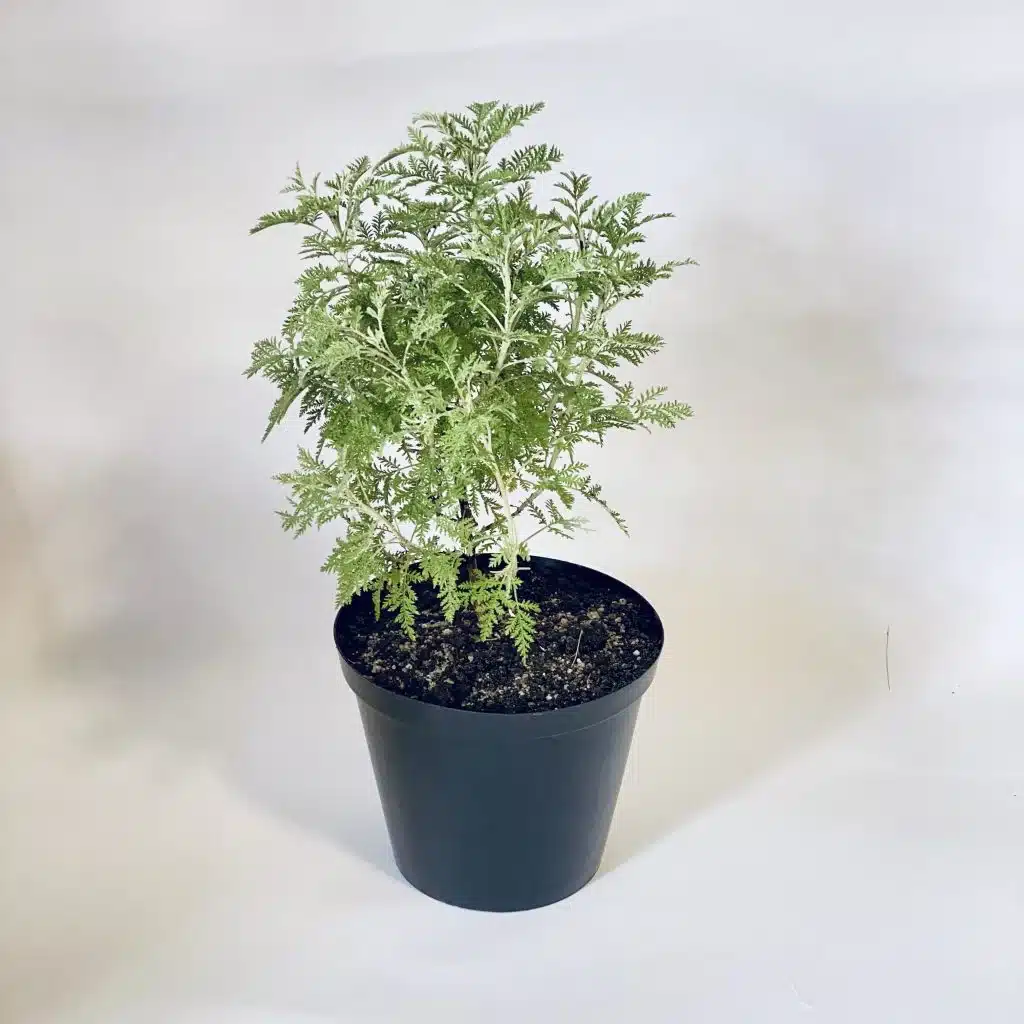
Over the years, we have learned that herbs are an essential part of our vegetable garden, not only because when in flower, they are beautiful and attract beneficial insects, but they also play an essential part in the culinary world, making for delicious teas, and, with certain herbs, deterring pests!
Artemisia afra / African wormwood is a member of a large family of plants containing more than 400 species. This hardy perennial bush can grow up to 2m high and 2m wide. African Wormwood prefers full sun; it becomes a hardy, drought-resistant plant when established.
African Wormwood is a great natural pest control in the garden. Its leaves are very strong-smelling, which few bugs can withstand.
In the garden, we will use shredded Wormwood around all young seedlings in spring to protect them against worms. We will also add the leaves under strawberries to protect them from snails and slugs. We will plant African Wormwood between our fruit trees to help repel harmful insects. Follow this link to see how we use this herb in the garden. Dried powdered Wilde Als can be scattered around in cracks and crevices to deter ants and fleas.
DIY wormwood pest control
- Pour two litres of boiling water over 3 cups of Wormwood.
- Steep for 15 minutes and strain
- Dilute 1:5 for use on insect pests, rust, and mildew
The tea can also be used, mixed with warm water, as a final rinse against fleas after you have washed your dog.
Through the years, African Wormwood, also called Wilde Als, has been used for many things.
- It’s been used as a blood purifier.
- It’s been used to make bitter tea and to treat every disease under the sun.
- Put fresh leaves into nostrils to clear blocked nasal passages.
- Hot leaves were bound over sprains.
- It has been ground into a powder to deter ants.
- Moths, insects, and fleas probably don’t like it.
- The leaves have been in socks to help treat sweaty feet.
African Wormwood will not only add lovely texture and colour to mixed herbaceous borders, especially if combined with other Indigenous beauties like wild dagga and wild sage, but it will also repel pests, and it is a must in your herbal medical kit.
** The above material is for informative purposes only. Always seek advice from a medical practitioner **
Happy Gardening Friend
Tash & Family





0 Comments